Thinking Europe from the water
While most researchers look at Europe from a continental perspective, our interdisciplinary consortium LIMINALWATER (which is funded by the HERA/Chanse programme ), consisting of five countries, investigates the waterways that mark the peripheries or borders of Europe, and thus represent "liminal" waterways. Through different approaches from literary, cultural, social and historical studies, we explore the possibilities and challenges that arise in these border areas of different waterways.
Liminal Waterway Countercultures: Models for Adaptation and Diversity
By Liminal Waterway Countercultures we mean creative alternative ways of life that have emerged in these spaces. They developed against the backdrop of the European diversification crisis (fuelled by fearful discourses on cultural diversity and human mobility) and the ecological crisis (which has resulted in the drying up, erosion and flooding of rivers and coastal landscapes, among other things) and led to the genesis of countercultures, which can be understood as models of resilience.

Carried by water: culture and resistance
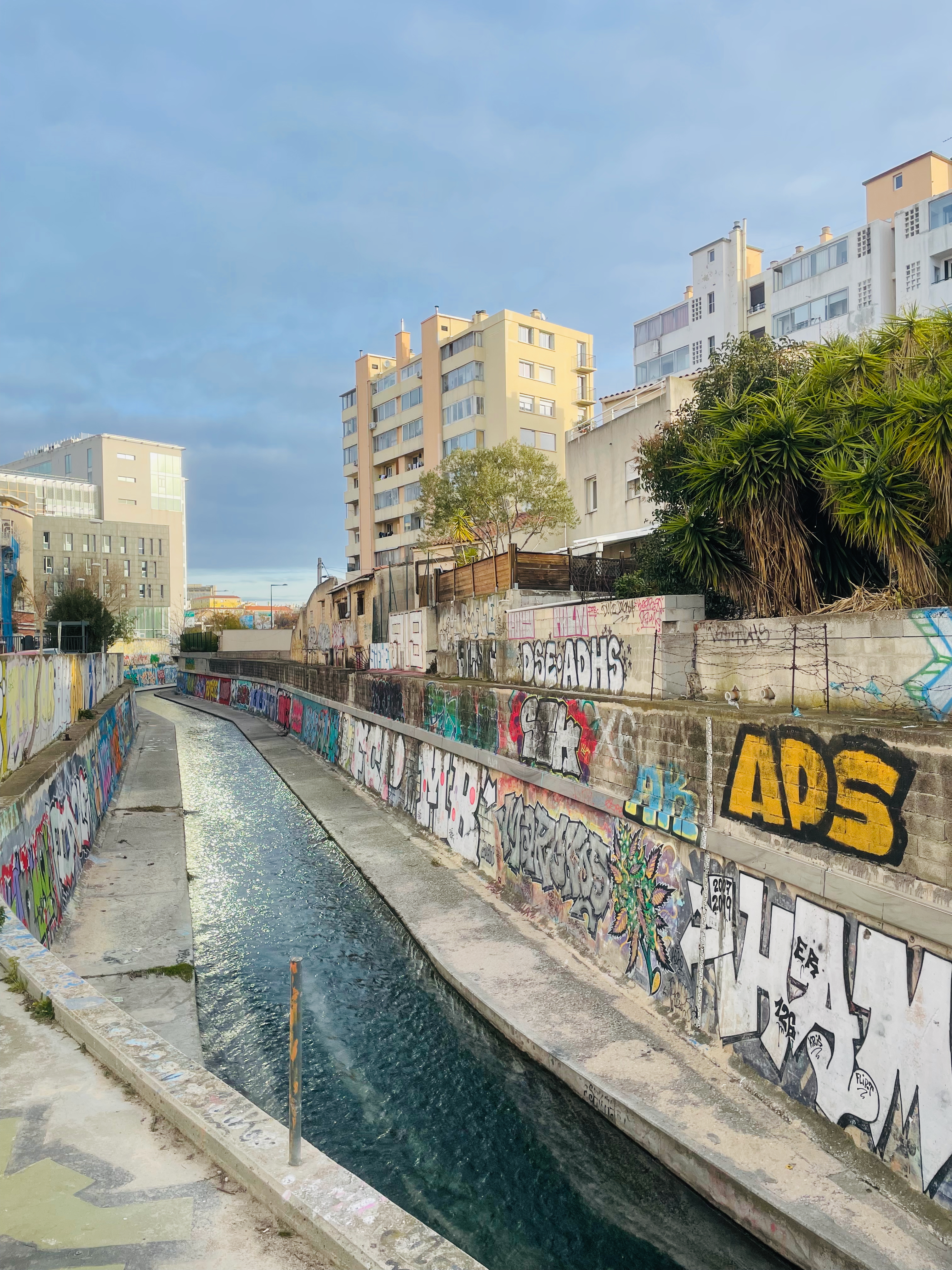
We draw on displaced narratives that elaborate the role of water in Europe - both in its metaphoricity and materiality - for diverse communities, artists, activists and communes, and illustrate how waterways have shaped post-colonial and post-imperial, post-fascist and post-socialist, urban and natural spaces. We draw on historical, literary, spatial and anthropological methodologies to explore water-related, multilingual sites of pluricultural production and diverse cohabitation that have been shaped by flows of people, ideas and objects. Our case studies - both historical and contemporary - take us to the Atlantic estuaries of Ria Formosa and Merseyside, the harbours of London and Ostend, the Mediterranean coasts of Marseille and Athens, and the network of rivers linking Central Europe to the Balkans and the Adriatic.
Waterways socially contextualised
In collaboration with our associated partners - Sciaena (a Portuguese grassroots environmental NGO), the Museum of European and Mediterranean Civilisations in Marseille (Mucem) and the Museum of Maritime and History of the Croatian Coast in Rijeka (PPMHP) - digital audiovisual material on each site will be produced within the project (including virtual 'walks' for each site as well as cartographic resources, enabling non-academic users inside and outside our sites to visualise them and see the connections between them). The project will conclude with a museum exhibition at the PPMHP, which will showcase the results of all the individual projects and thus also illustrate future resilience strategies for the challenges of the climate crisis and migration change.