



Assemblage and a Field Walk in the North Adriatic Littoral (Hrvatsko primorje)
Glossary
In her very important book Vibrant Matter, Jane Bennett begins with a coastal scene while searching for ways to “bear witness to the vital materialities that flow through and around us” (x). During her walk to the Chesapeake Bay, she encounters a seemingly ordinary collection of things: “glove, pollen, rat, cap, stick” (4). Yet instead of seeing them as passive objects, she observes the “thing-power” and singularity of the “contingent tableau that they formed with each other” (5). For Bennett, these everyday materials reveal the “curious ability of inanimate things to animate, to act, to produce effects dramatic and subtle” (6). Her attempt to move beyond the strict separation between human and non-human worlds begins with what she calls an ecological sensibility (xi): an awareness of the interconnected and circulating forces that shape our surroundings. Through her concept of the assemblage, understood as a living, throbbing confederation of diverse human and non-human elements, Bennett invites us to reconsider the landscapes we inhabit.
This raises an interesting question: could the traces left by humans in coastal regions of the north Adriatic littoral also be understood as a form of vibrant matter, carrying stories of shared and distributed agency? A stone wall, an abandoned object, a piece of plastic, a tool left behind – these are not simply signs of human presence, but parts of temporary assemblages in which natural, material, and cultural histories meet. While the Anthropocene has drawn attention to the enormous impact of human activity on the planet, it is equally important to listen to smaller, local, and fragmented stories. Coastal landscapes, especially fragile environments such as the karst regions of the northern Adriatic, are not only shaped by geological processes but also by everyday interactions between humans, animals, plants, water, and materials.
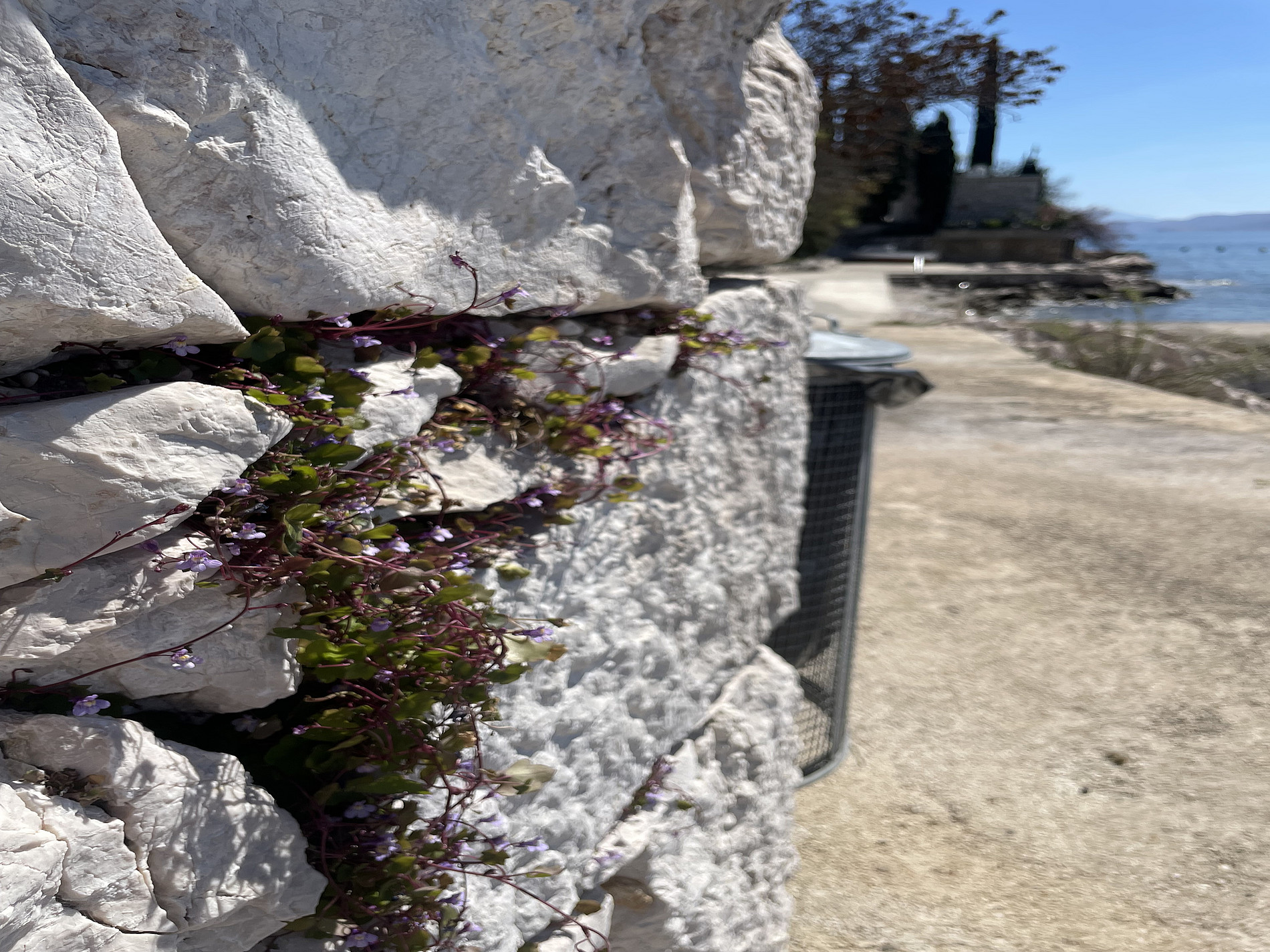
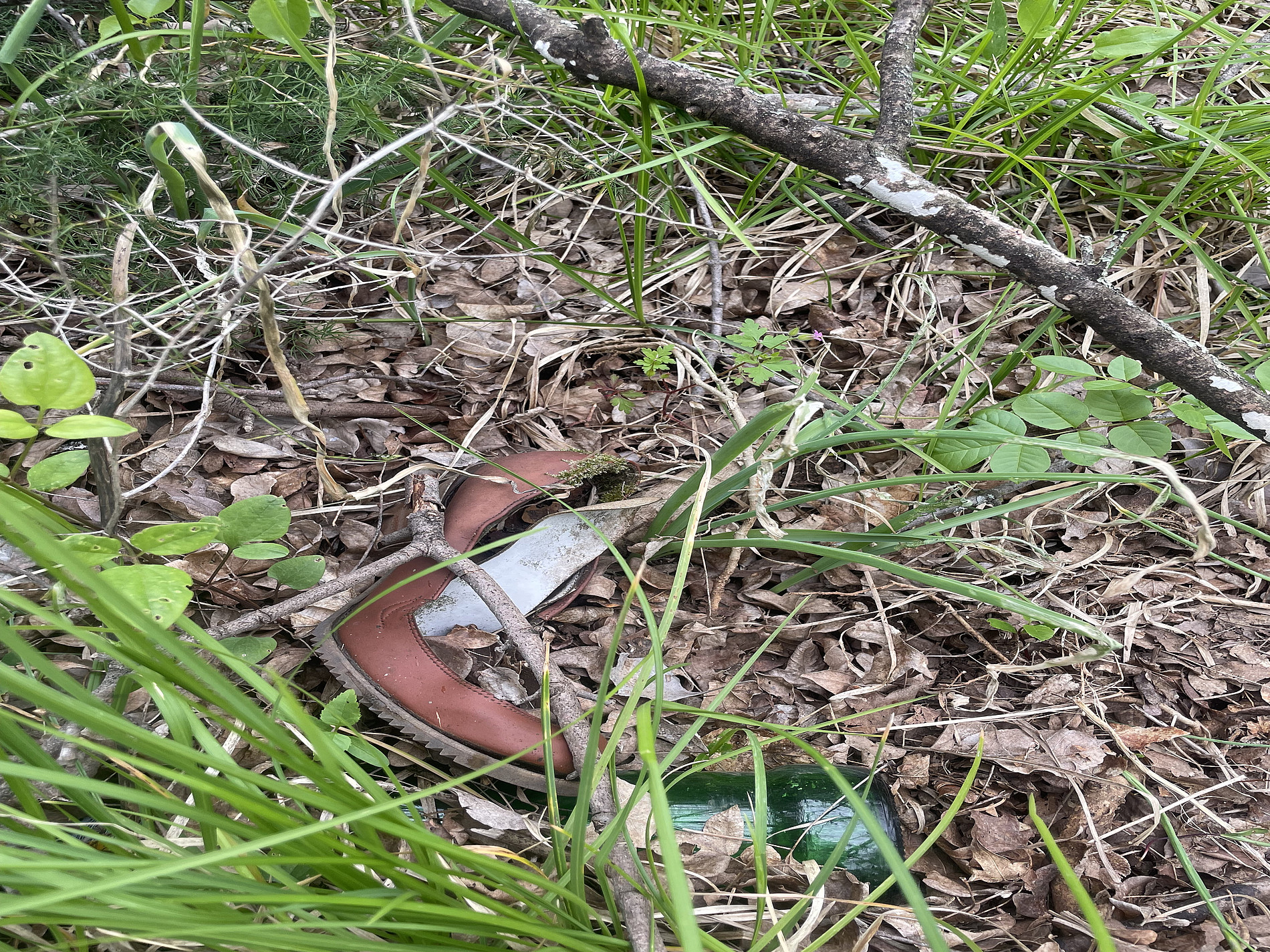
Their stories do not follow clear hierarchies or fixed boundaries; instead, they emerge through temporary, specific configurations among many different actors. The image of a stone wall and a discarded bucket, for example, can be read as such a small assemblage: a moment in which human traces become part of a larger ecological narrative. The lost shoe tells a different story – it is now rubbish, but also a memory of a probably intense encounter.
The diagnosis of our present age, captured by the term Anthropocene (Crutzen & Stoermer 2000), suggests that human activities have profoundly transformed almost every dimension of the Earth system. This awareness has given rise to new cultural narratives that explore not only possible futures but also the deep connections between geological and human histories (Chakrabarty 2009). The concept of nature-culture memory (Dürbeck & Probst 2023) examines how material traces, as preserved in rocks, ice, tree rings, coral skeletons, and other forms of matter, become transformed from physical evidence into scientific knowledge and eventually into stories through literature, film, art, and politics. From the perspective of the blue humanities, the assemblage found in the karst landscape appears as a dynamic archive: a space where materials, memories, histories, and living beings continuously interact and reshape one another. The coast therefore becomes more than a border between land and sea.
These photographs reveal small “patches” of the intersecting Anthropocene, or phenomena that Anna L. Tsing describes as specific, localized places deeply transformed by human activity. Her idea of the Patchy Anthropocene builds on the earlier digital project Feral Atlas: The More-Than-Human Anthropocene (2020), which maps “feral” ecologies: environments that emerge when non-human processes become entangled with human infrastructures. Rather than imagining the Anthropocene as one uniform, planetary condition, Tsing emphasizes its fragmented and uneven character. Change happens through particular places, through encounters between species, materials, technologies, and histories. These patches reveal complex relationships between human and non-human actors, showing how landscapes are continuously reshaped by industrial, touristic, and capitalist infrastructures. In this view, knowledge cannot be created only through large universal theories; it must also be assembled “patch by patch”, i.e. through close observation, fieldwork, and attention to specific environments.
The small karst landscape of the northern Adriatic can be understood precisely in this way. The traces of wire embedded in the dry stone walls are remnants of past practices: they once marked property boundaries and enclosed spaces for animals.
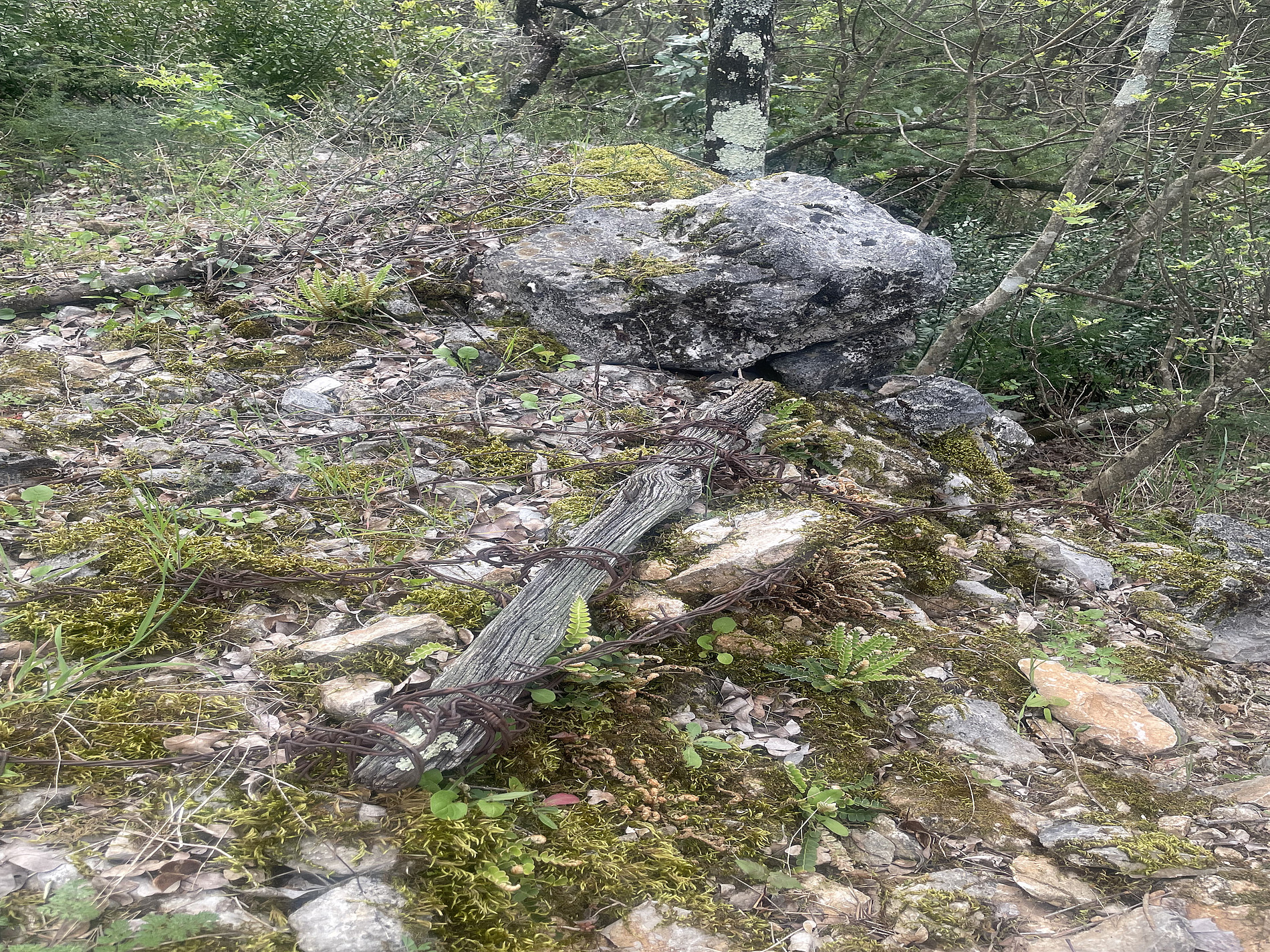
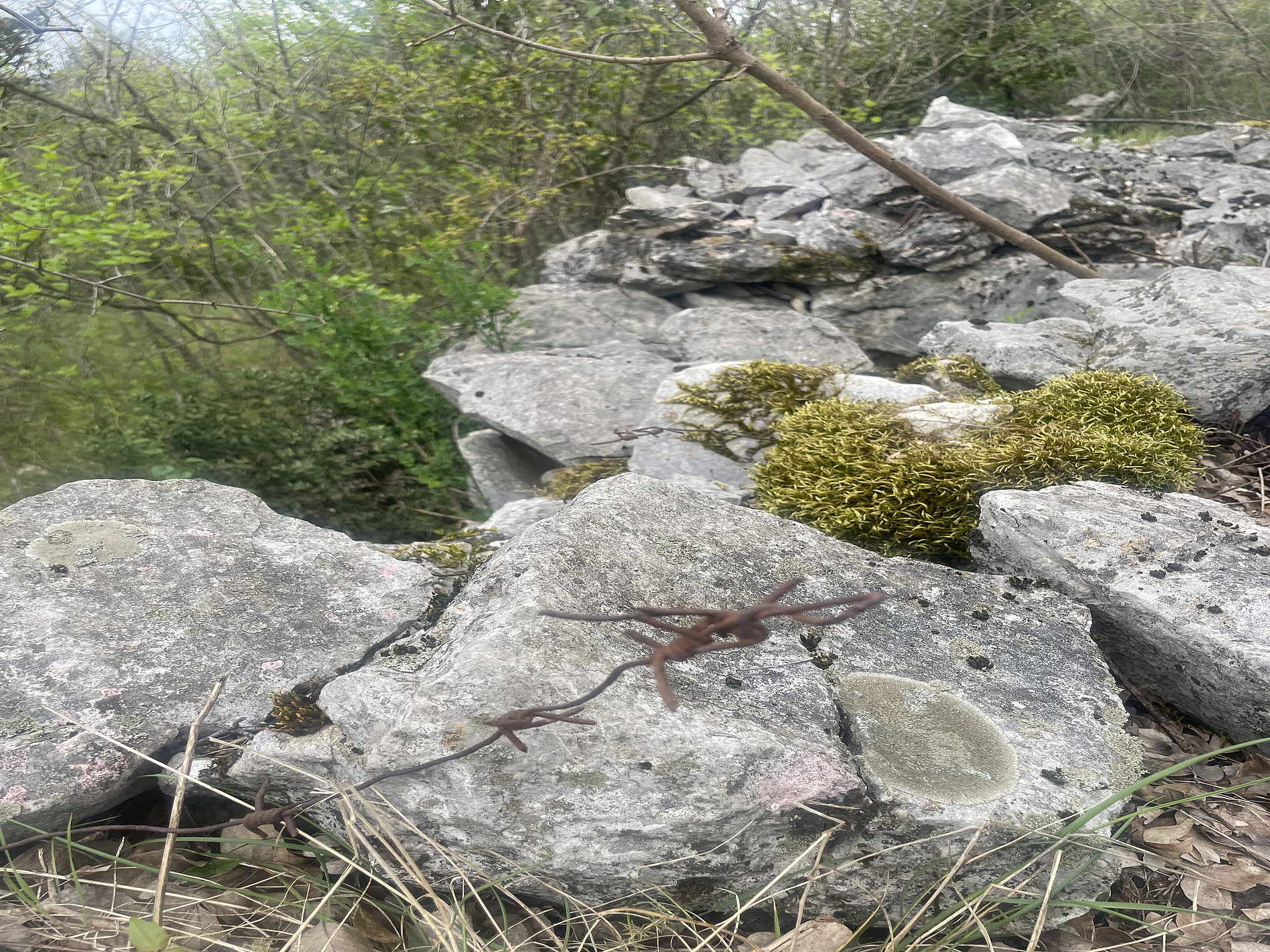
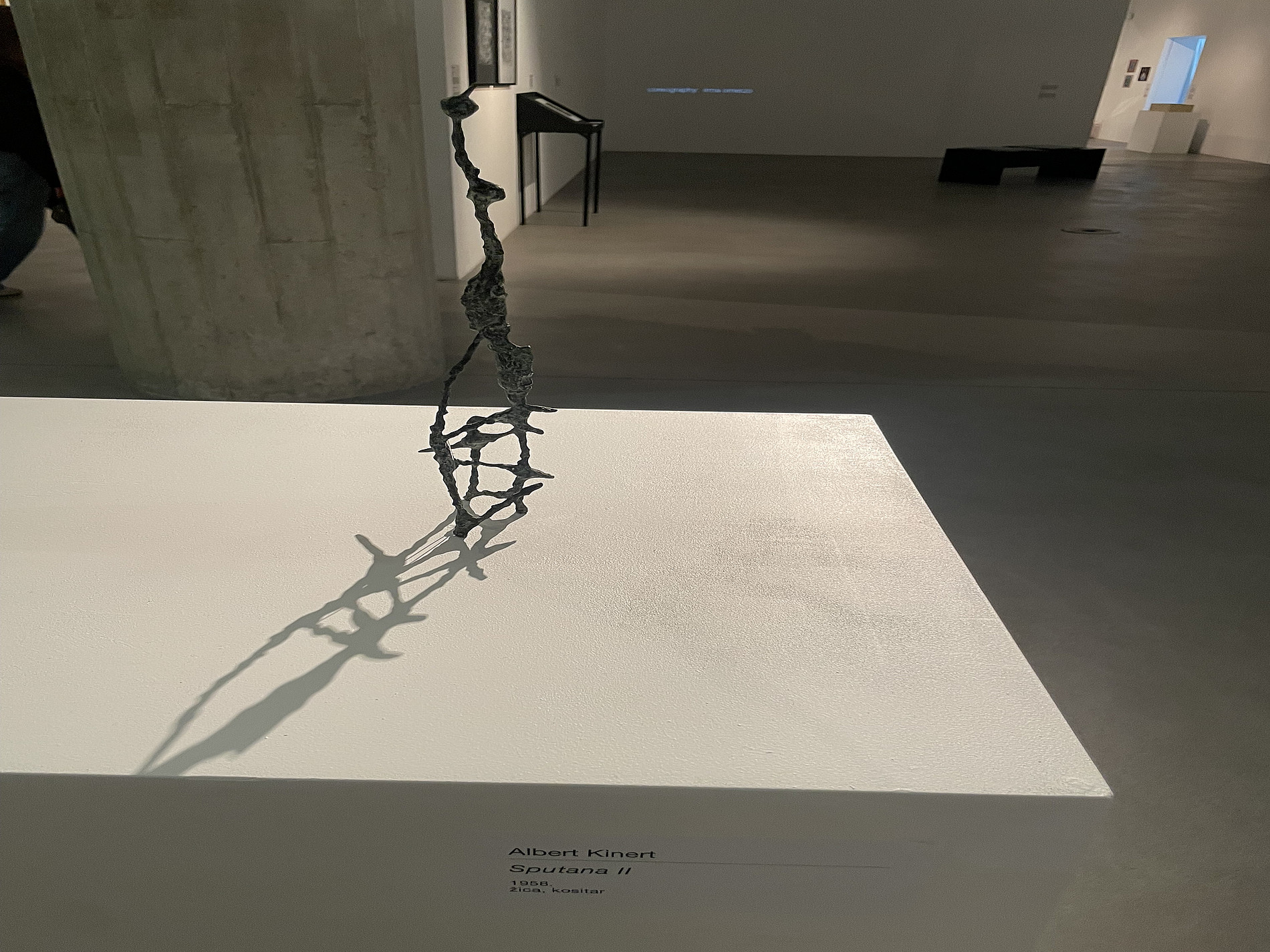
Today, these human-made materials have merged with the landscape, visible only when we look more carefully. They appear as silent, almost unsettling witnesses of a vanished everyday world. Seen as assemblages, these fragments also evoke the language of art. The twisted relationship between stone and metal recalls, for example, Albert Kinert’s 1956 sculpture Sputana, where tension between restraint and movement becomes a central visual element. The photographs from a walk through the karst landscape this spring were created through a field-guide approach: observing the uneven and often unexpected traces of human activity and following the ways in which the dry, stone-shaped environment absorbs, transforms, and preserves these encounters. The landscape reveals many such small assemblages – from forgotten sunscreen containers hidden in the maquis over winter and appearing only after the summer vegetation disappears, to new forms of life emerging around tourist infrastructures, fragments of broken glass on the shore, or cultivated flowers spreading beyond gardens and mixing with native species.
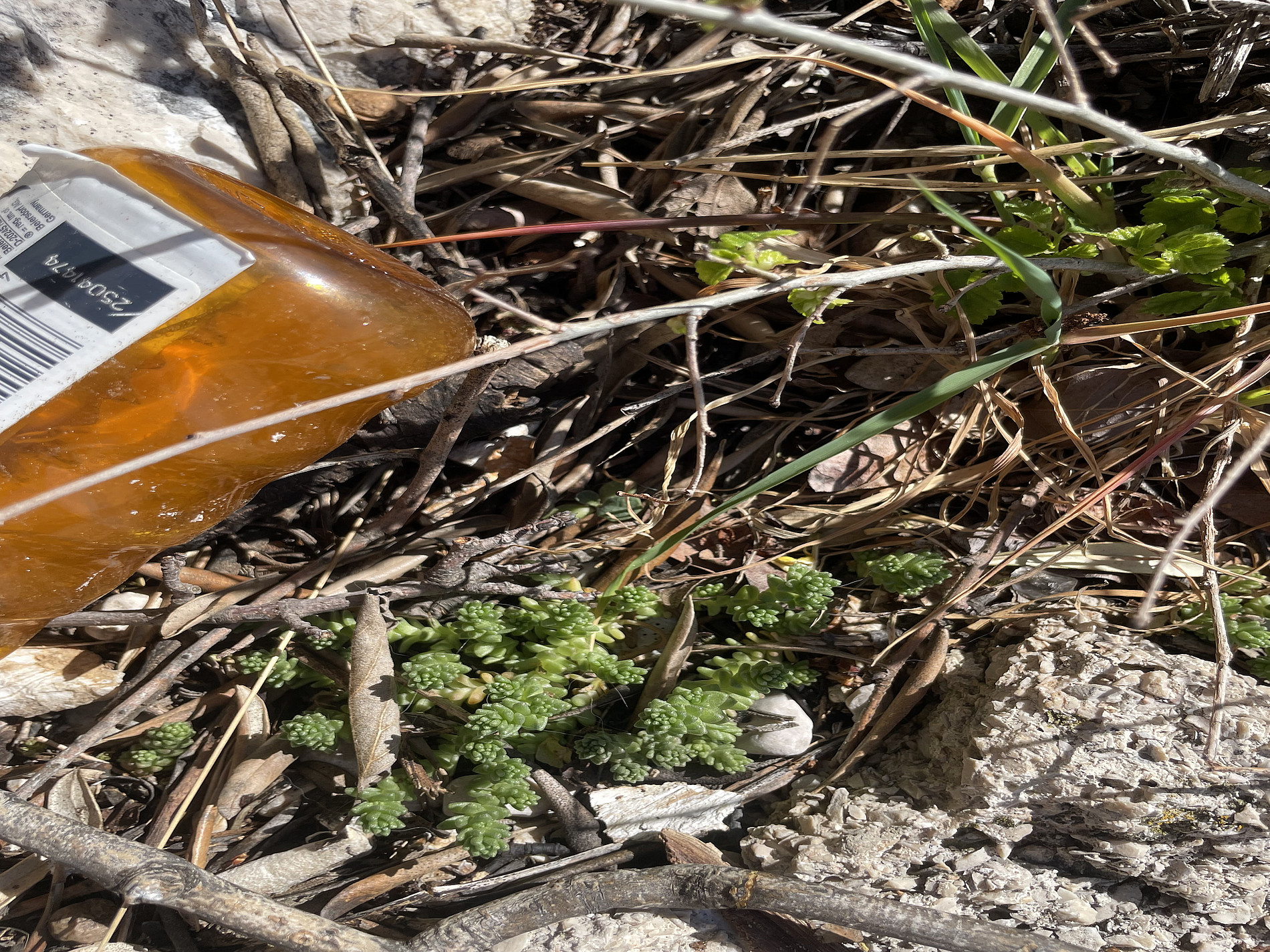
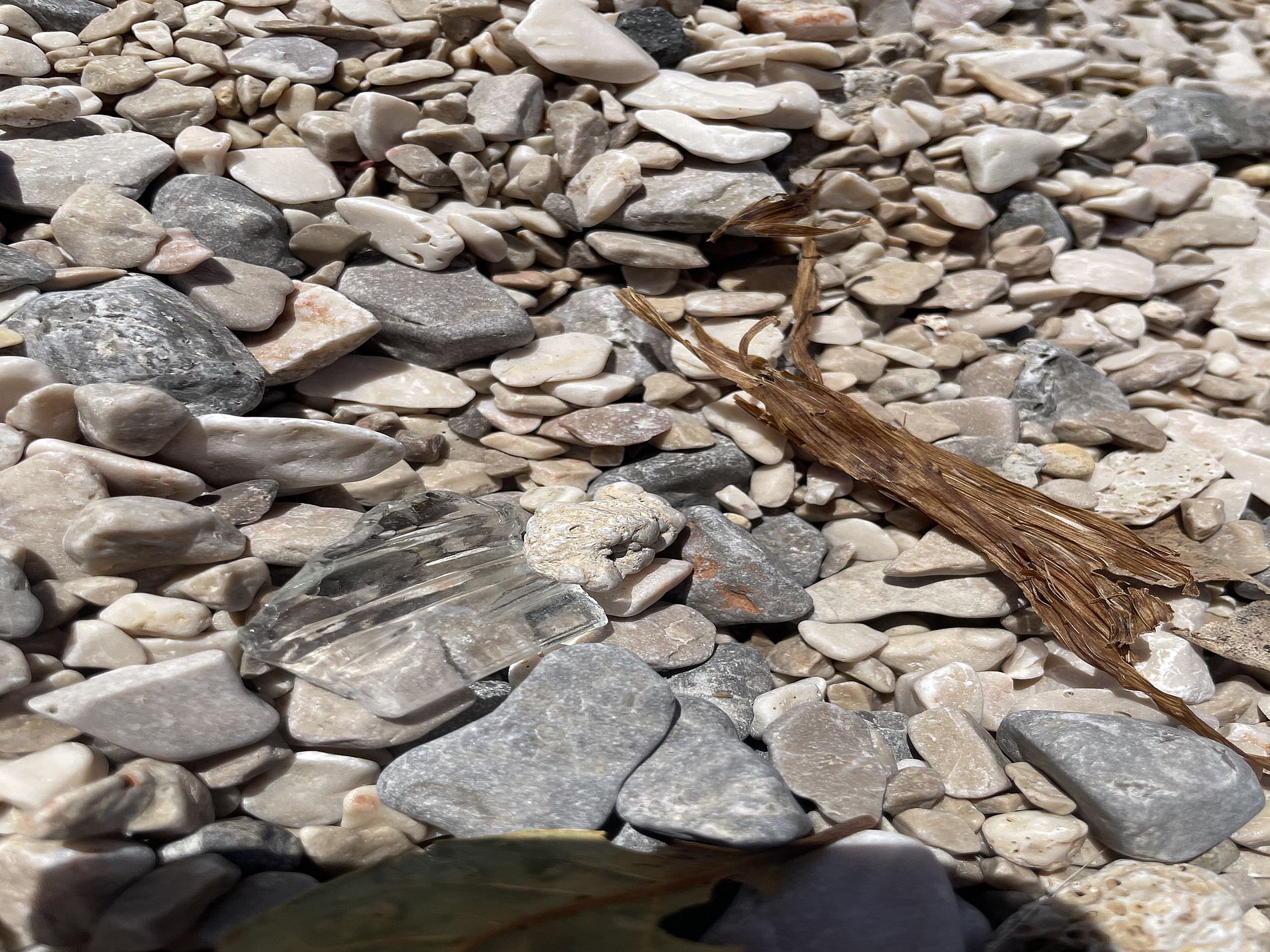
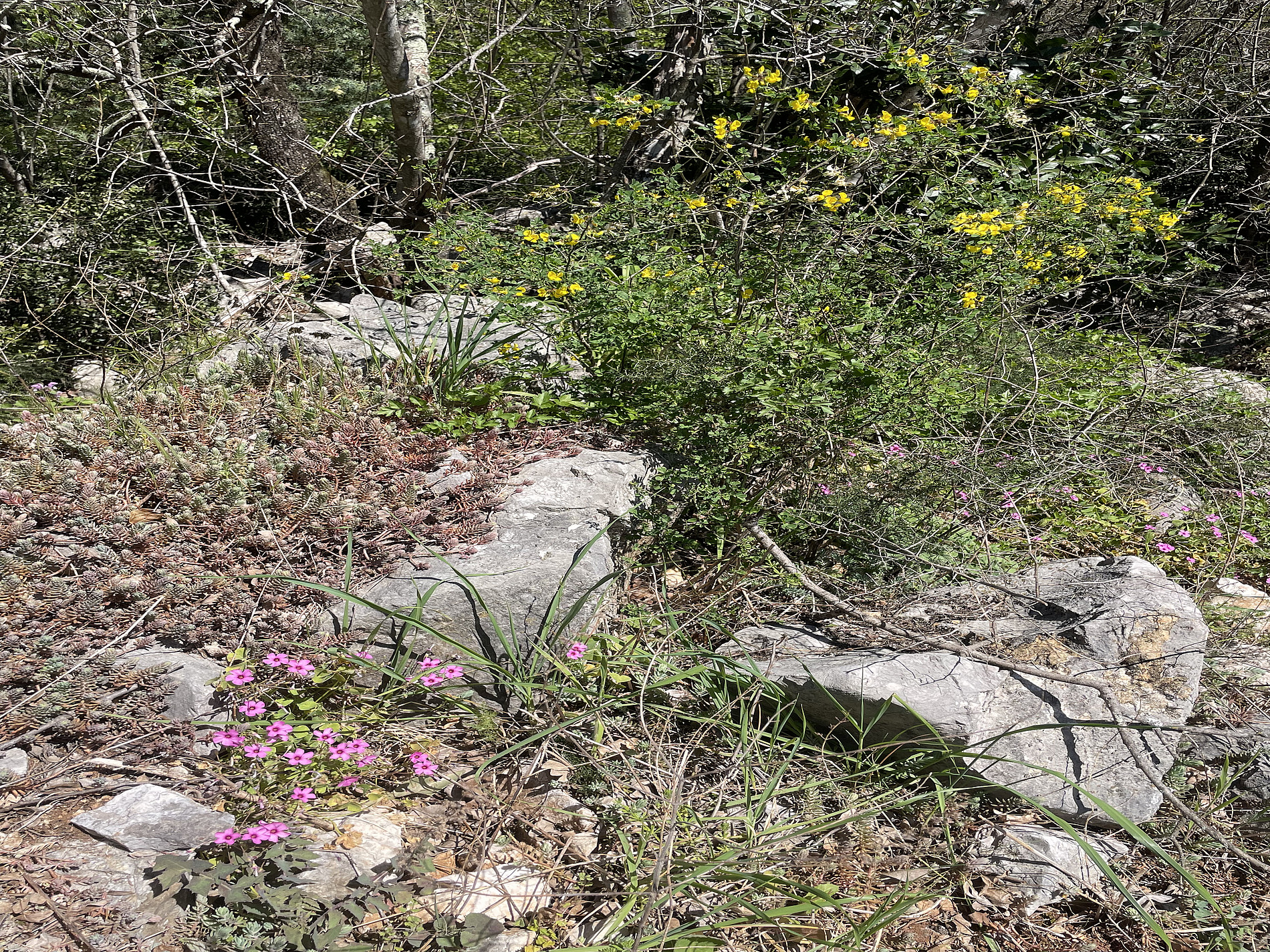
That means, from the perspective of the blue humanities, the Anthropocene is not only a story about human impact on the sea and coastal environments. Coastal spaces are not passive backgrounds or simple settings; they are active historical archives where geological processes, ecological transformations, and human memories intersect. When we read these assemblages as traces of presence, we can rethink the maritime history of karst regions, not only through grand narratives of trade, migration, and settlement, but also through the small material encounters that continue to shape and reshape the coast today.
Sources:
Benett, Jane. 2010. Vibrant Matter. A Political Ecology of Things. Duke UP: Durham, London.
Chakrabarty, Dipesh. 2025. Das Klima der Geschichte im planetarischen Zeitalter. Transl. Christine Pries. Suhrkamp: Frankfurt/M.
Dürbeck, Gabriele and Simon Probst: Tiefenzeitliche Erinnerungen in der anthropozänen Literatur. Auf dem Weg zur Theorie eines naturkulturellen Gedächtnisses. Kulturwissenschaftliche Zeitschrift 1 (2023), 50–74. DOI: 10.28937/9783787346400_2 .
Lowenhaupt Tsing, Anna and Jennifer Deger, Alder Keleman Saxena, Feifei Zhou. 2024. ed. Field Guide to the Patchy Anthropocene. The New Nature. Stanford University Press: Stanford.
Date: 24. 6. 2026.