Begin of page section:
Page sections:

  • Go to contents (Accesskey 1)
  • Go to position marker (Accesskey 2)
  • Go to main navigation (Accesskey 3)
  • Go to sub navigation (Accesskey 4)
  • Go to additional information (Accesskey 5)
  • Go to page settings (user/language) (Accesskey 8)
  • Go to search (Accesskey 9)

End of this page section. Go to overview of page sections

Begin of page section:
Page settings:

English en
Deutsch de
Search
Login

End of this page section. Go to overview of page sections

Begin of page section:
Search:

Search for details about Uni Graz
Close

End of this page section. Go to overview of page sections


Search

Begin of page section:
Main navigation:

Page navigation:

  • University

    University
    • About the University
    • Organisation
    • Faculties
    • Library
    • Working at University of Graz
    • Campus
    Developing solutions for the world of tomorrow - that is our mission. Our students and our researchers take on the great challenges of society and carry the knowledge out.
  • Research Profile

    Research Profile
    • Our Expertise
    • Research Questions
    • Research Portal
    • Promoting Research
    • Research Transfer
    • Ethics in Research
    Scientific excellence and the courage to break new ground. Research at the University of Graz creates the foundations for making the future worth living.
  • Studies

    Studies
    • Prospective Students
    • Students
    • Welcome Weeks for First Year Students
  • Community

    Community
    • International
    • Location
    • Research and Business
    • Alumni
    The University of Graz is a hub for international research and brings together scientists and business experts. Moreover, it fosters the exchange and cooperation in study and teaching.
  • Spotlight
Topics
  • Sustainable University
  • Researchers answer
  • Work for us
Close menu

End of this page section. Go to overview of page sections

Begin of page section:
You are here:

University of Graz Liminalwater Projects Lived Histories of Liverpool’s Waterfront
  • Projects
  • Team
  • News
  • Events

End of this page section. Go to overview of page sections

Begin of page section:
Sub navigation:

  • Projects
  • Team
  • News
  • Events

End of this page section. Go to overview of page sections

Currents of Change

Lived Histories of Liverpool’s Waterfront

Currents of Change: Lived Histories of Liverpool’s Waterfront explores perspectives on Liverpool’s shores. These shores are presently marked by flooding, dangerously shallow canals, depleted reservoirs and microplastic pollution, and its docks, primarily the Albert Dock, traversed by imperial circulations including the trade in enslaved humans. The project asks questions about Liverpool’s waterfront as a site where migration, labour, empire and environmental change intersect, centring the perspectives of communities historically central but overlooked in official narratives of the docks. In response to post-imperial racism, post-industrial poverty and eco-crisis, the city generates scenes spanning activism, spoken word and street art that articulate African roots, trans-Atlantic diasporic routes and planetary care, while on Liverpool’s transformed docks, the International Slavery Museum sits alongside the Merseyside Maritime Museum.
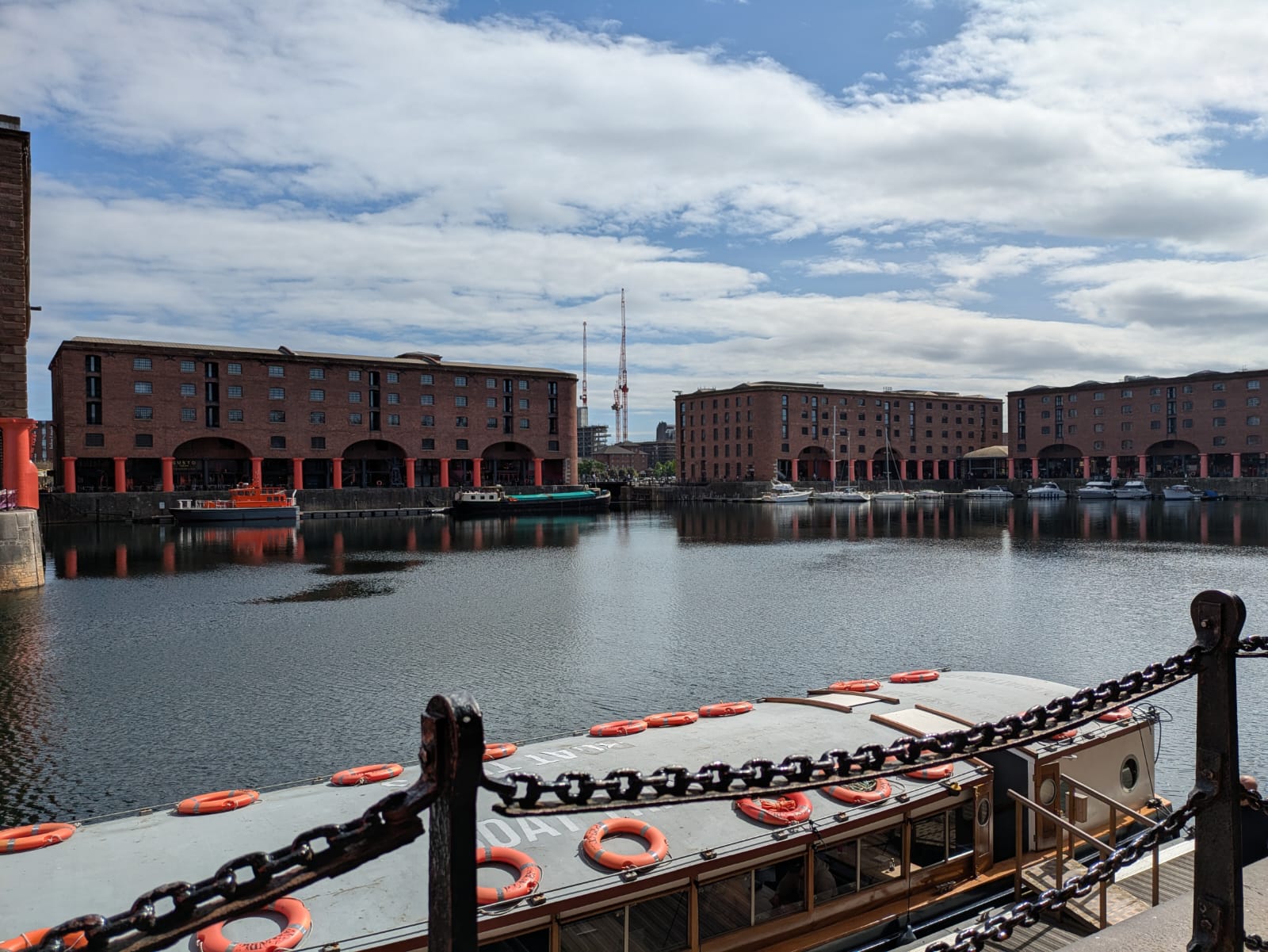
Das Foto zeigt einen weiten Blick auf das historische Albert Dock in Liverpool mit ruhigem Wasser, umgeben von großen Lagerhäusern aus rotem Backstein mit gewölbten Erdgeschossen. An den Rändern liegen Boote vor Anker, und im Vordergrund verläuft ein alter Kettenzaun. Der Himmel ist teilweise bewölkt, mit blauen Flecken und Sonnenlicht, das sich auf dem Wasser spiegelt. ©Daniella Shaw
©Daniella Shaw
Albert Dock, Liverpool
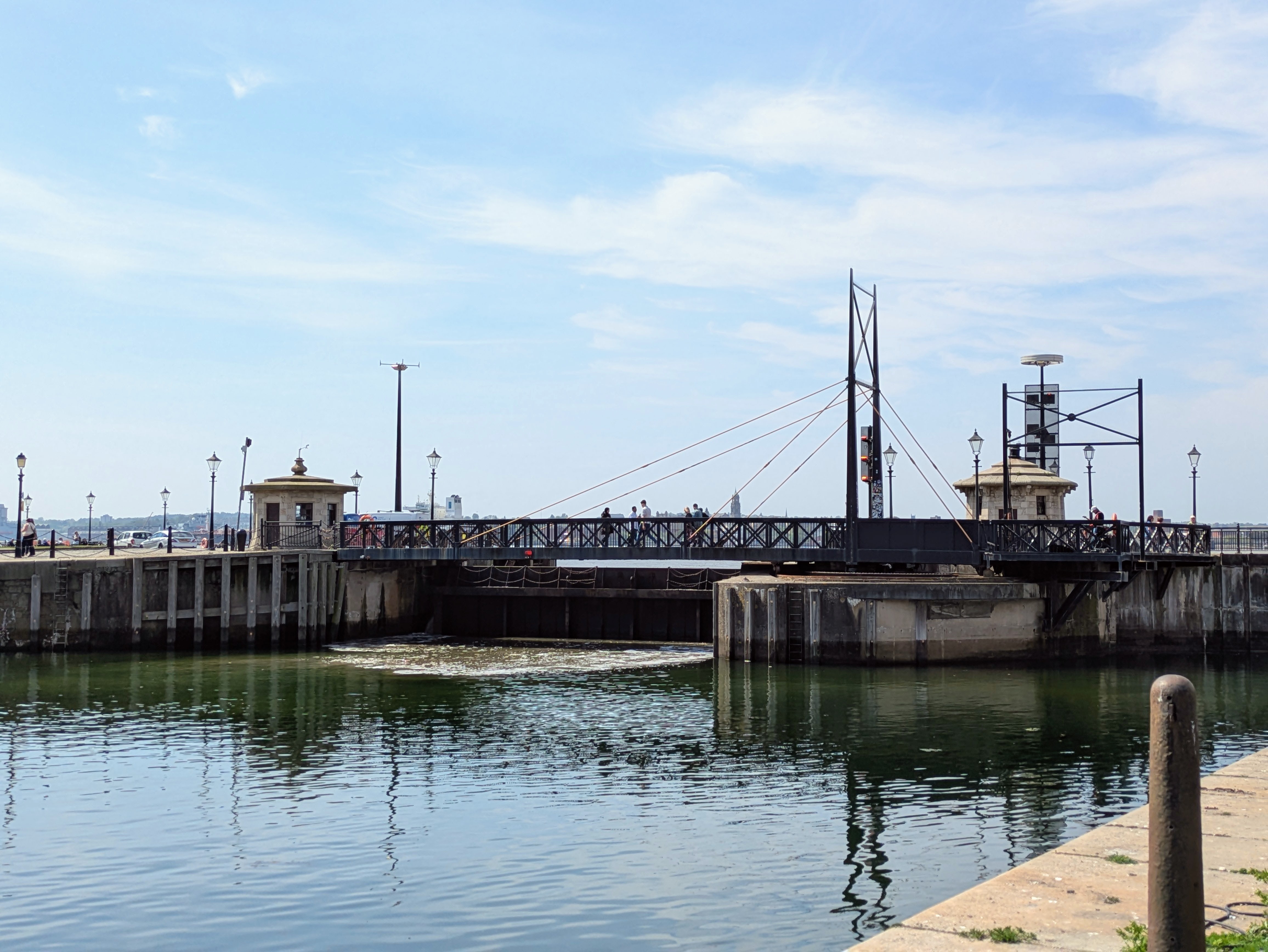
Blick auf eine historische Drehbrücke, die ein ruhiges Hafenbecken in Liverpool überspannt. Die Brücke hat schwarze Geländer und Seile und verbindet zwei kleine Kontrolltürme aus Stein mit gewölbten Dächern. Unter strahlend blauem Himmel gehen mehrere Menschen über die Brücke, und das Wasser darunter spiegelt die Konstruktion und die umliegenden Lampen entlang des Kais wider. ©Daniella Shaw
©Daniella Shaw
Swing bridge, Liverpool

Bringing narratives of marginalised residents to the fore (including participants in the city’s historically overlooked Black communities), we will use a participatory photography methodology derived from “Photovoice”, originally deployed with disempowered women farmers, “to promote a process of women’s participation that would be analytical, proactive, and empowering” (Wang and Burris 1994: 179). Archival research to collect historical materials (e.g. in the Liverpool Echo local newspaper founded in 1879) that speak to themes of migration and maritime crisis, will constitute prompts for the community workshops, which are held at key sites around Liverpool’s docks and historic seafarer neighbourhoods. To respond, residents will be given cameras to produce alternative visual accounts of waterfront life, leading to a co-curated local exhibition on the docks, where participants’ photographs and stories will be presented.

Project lead: Daniella Shaw

Team: Amina Atiq
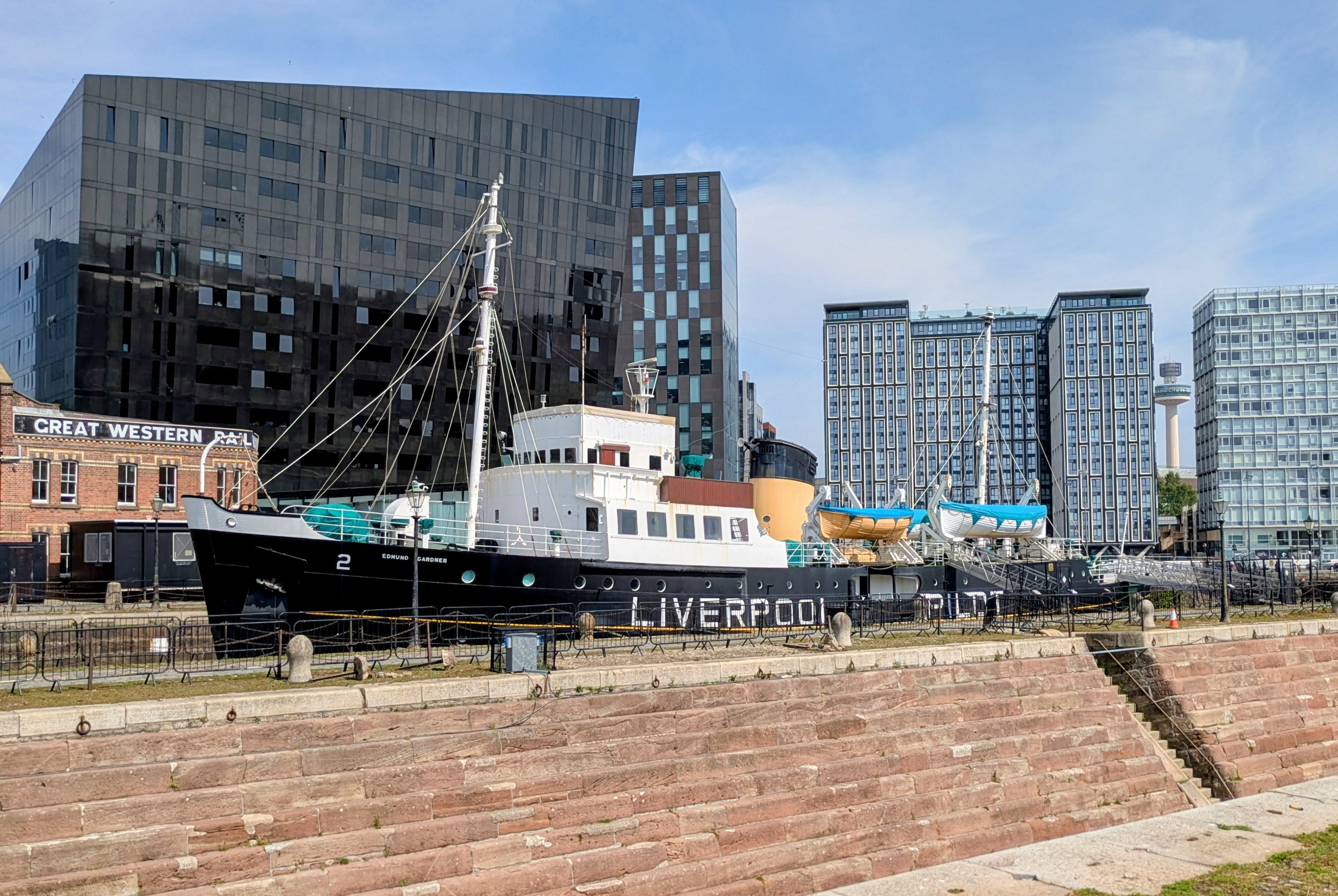
Das Foto zeigt ein historisches Schiff mit der Aufschrift „Liverpool“, das neben modernen Gebäuden in der Nähe einer Uferpromenade vor Anker liegt. Die industrielle Architektur steht im Kontrast zum traditionellen Design des Schiffes. Die Szene spielt sich unter einem klaren Himmel ab. ©Daniella Shaw
©Daniella Shaw
MV Edmund Gardner, Royal Albert Dock

Begin of page section:
Additional information:

University of Graz
Universitaetsplatz 3
8010 Graz
Austria
  • Contact
  • Web Editors
  • Moodle
  • UNIGRAZonline
  • Imprint
  • Data Protection Declaration
  • Accessibility Declaration
Weatherstation
Uni Graz

End of this page section. Go to overview of page sections

End of this page section. Go to overview of page sections

Begin of page section:

End of this page section. Go to overview of page sections