Currents of Changes: Lived Histories of Liverpool's Waterfront
Field Notes
Liverpool's waterfront sits awkwardly between celebration and complicity. The nineteenth-century docks built the city's wealth, and that wealth was in significant part the wealth of empire, including the wealth of the transatlantic trade in enslaved peoples. Today's waterfront still works as a port, but it is also a flood risk, a depleted reservoir, and a UNESCO listing recently lost. The communities most shaped by these intersecting histories are often least represented in how the waterfront is officially told.
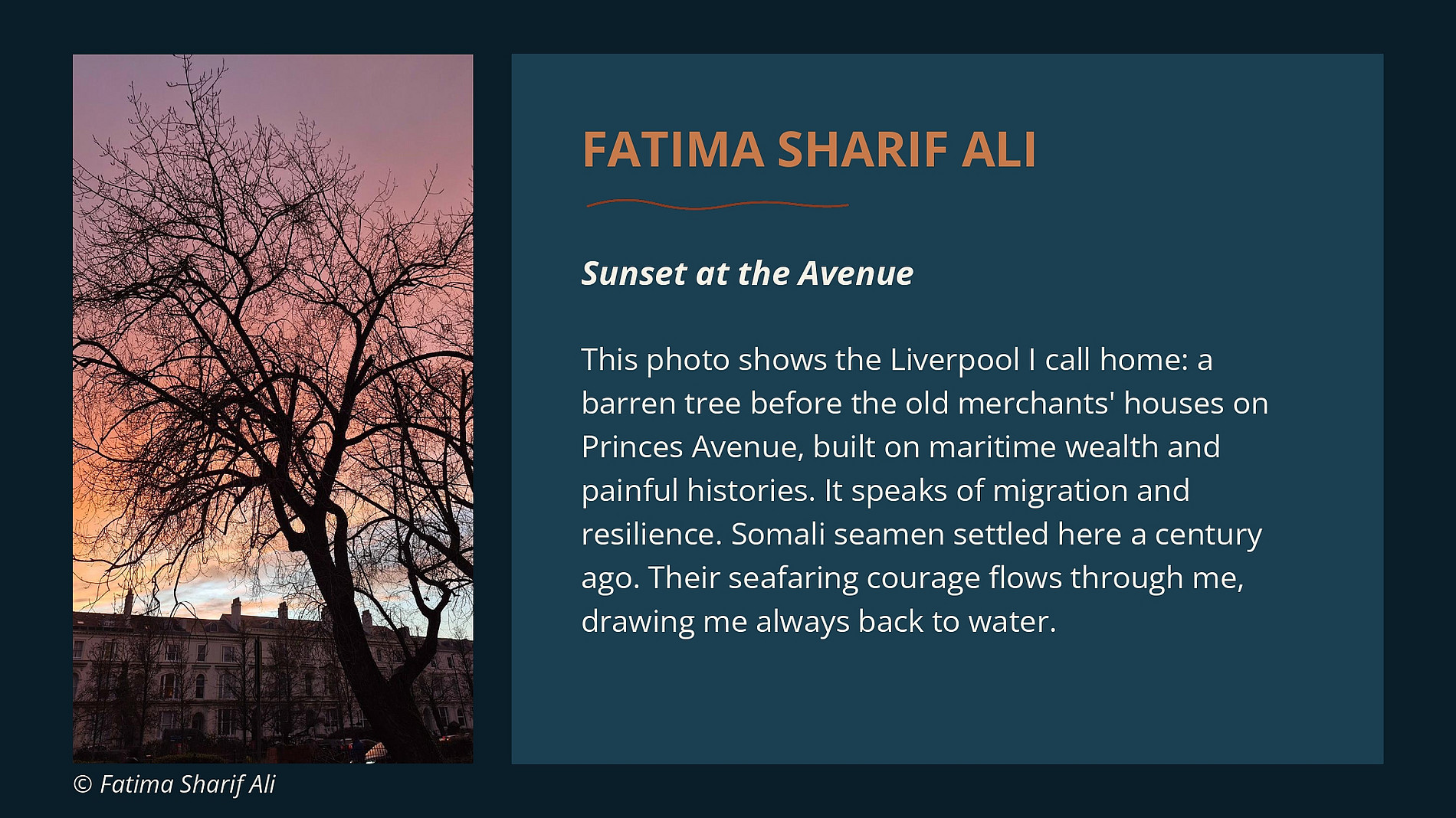
Currents of Change: Lived Histories of Liverpool's Waterfront is the UK strand of Liminal Waterway Countercultures. The project worked with twelve Liverpool residents whose lives are bound up with the city's docks, river and sea. Their heritages span Pakistan, Iran, Yemen, Libya, Kenya, Somalia, Sierra Leone, France, Wales, England and Liverpool itself. Some had family histories of seafaring stretching back generations. Some had themselves arrived in Liverpool by water. Some had no direct dockside connection but had grown up in neighbourhoods shaped by the maritime city.
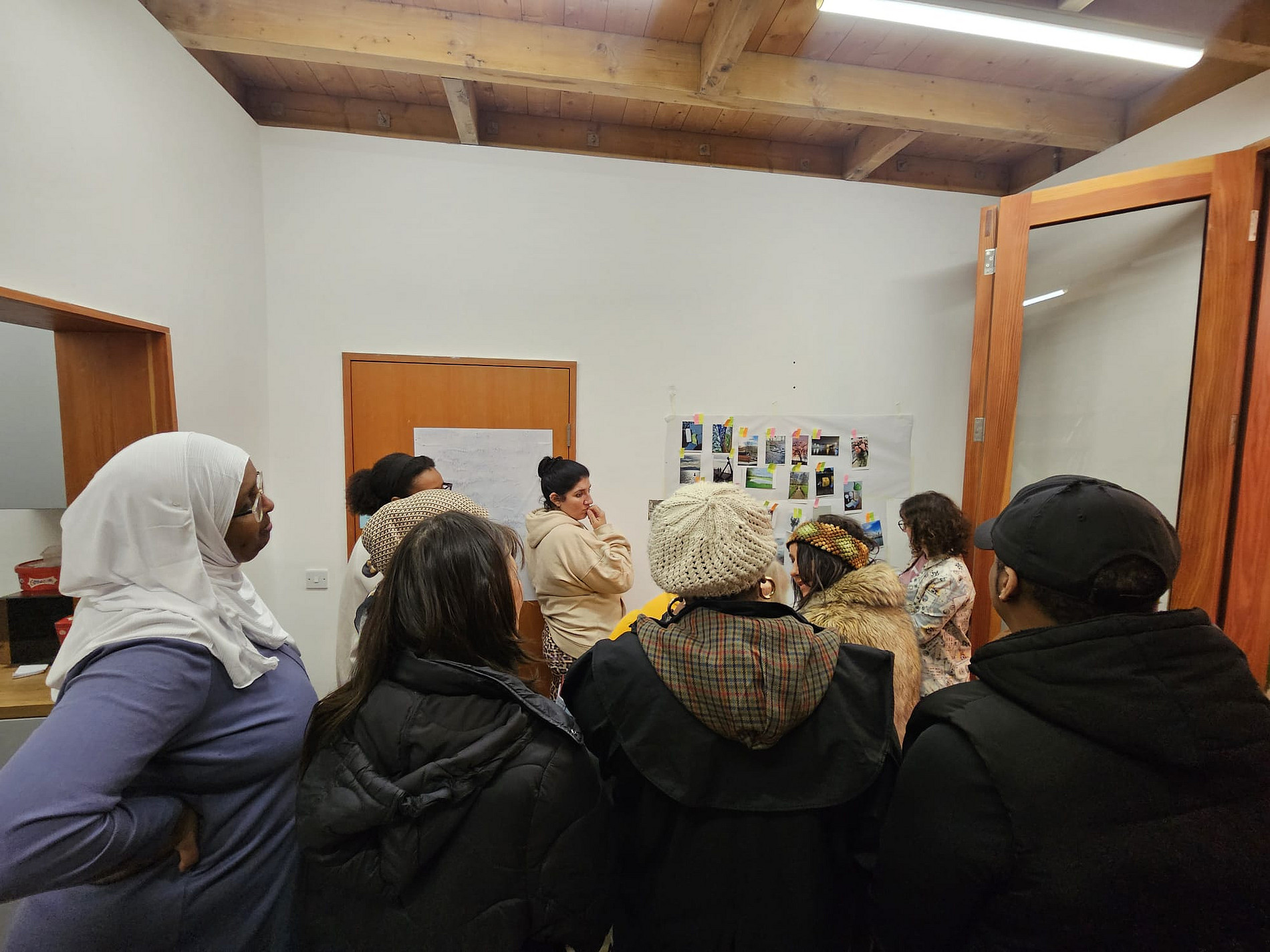
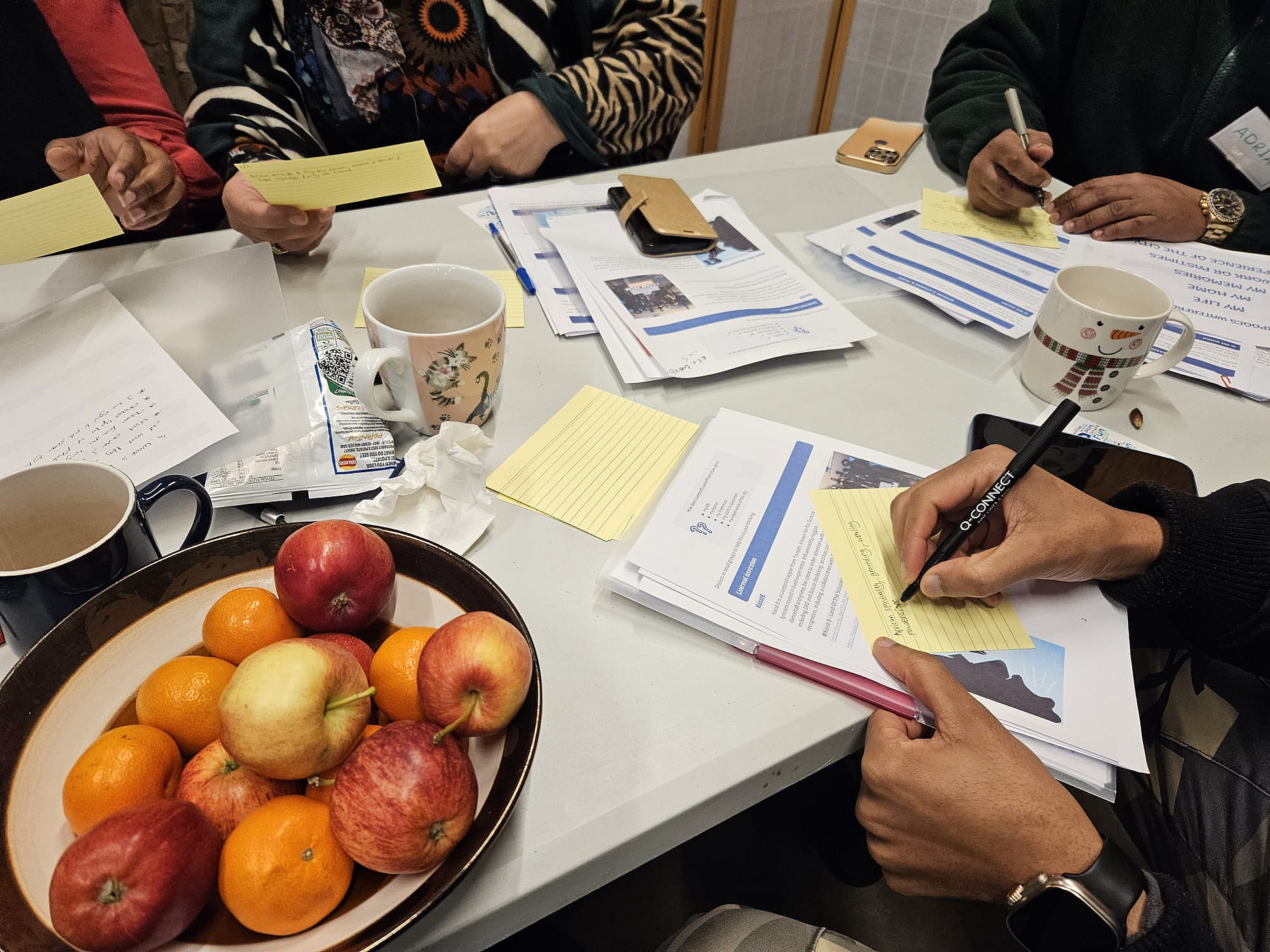
The methodological approach is participatory photography inspired by photovoice (Wang and Burris, 1997). The project draws on the approach rather than replicating it. Participants worked within a guiding question returned to throughout: what does Liverpool's waterfront mean to you? Images were made independently between sessions, brought back to the group, and captioned collectively with the support of Liverpool poet Amina Atiq. Themes, sequencing and the exhibition's organisation were decided by the participants.
Six sessions, two hours each, were held at Granby Winter Garden in Toxteth, Liverpool, between January and March 2026. The visible six sessions were based on the foundations of a much longer piece of work: about six months of relationship-building with community partners, faith spaces, neighbourhood networks and the local council before recruitment began. Trauma-informed facilitation practices were central in the delivery of the project. Several participants were navigating displacement, illness, grief or asylum proceedings during the weeks the project ran. One experienced racist abuse in a taxi on the way to our first session. The work of holding a welcoming room across these conditions formed a key part of the methodology.
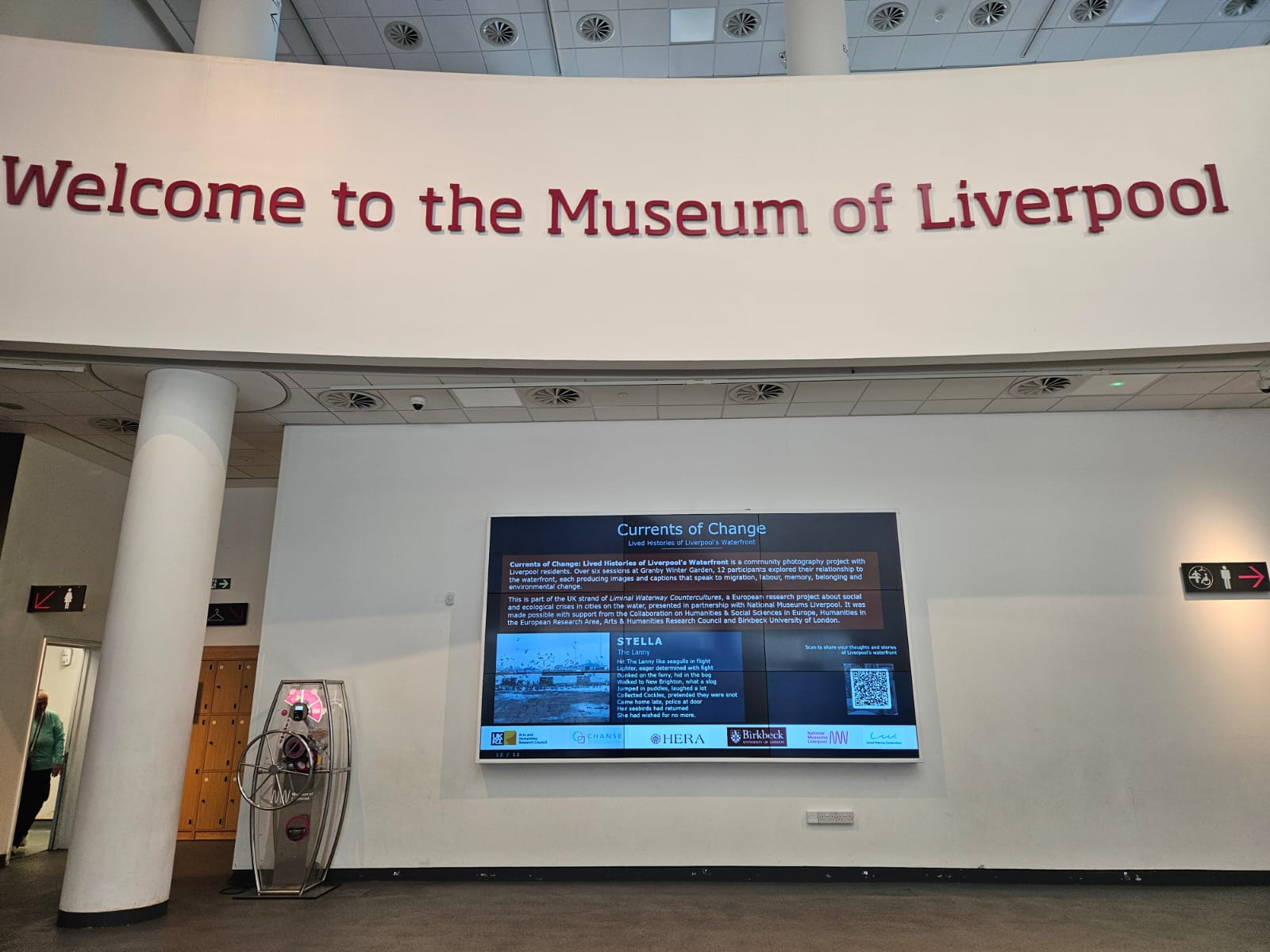
In the final session, the participants curated the exhibition themselves. Four themes emerged from their reading of their own work: Journeys and Narratives, Maritime, What we carry with us, and Cycles of community. The themes were the basis of how the group curated the sequencing of the exhibition currently at the Museum of Liverpool atrium until the end of August, before travelling to the Maritime and History Museum of the Croatian Littoral in Rijeka.
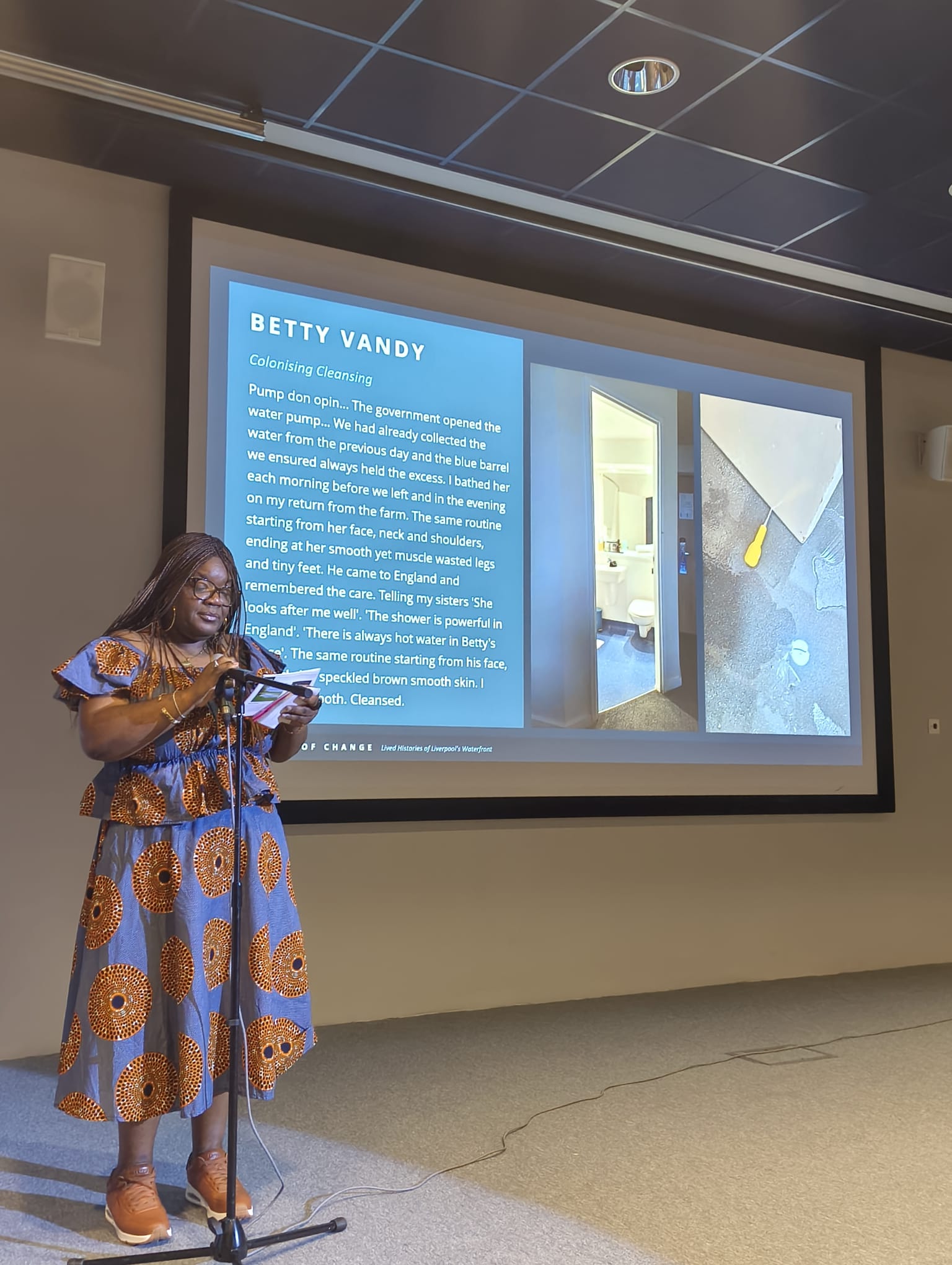
Taken together, the photographs surface a Liverpool waterfront refused as a waterfront postcard depiction. ‘Journeys’ appear as continuous and inherited, sometimes carried in objects, sometimes in daily routines. The ‘maritime’ theme places working-class and migrant dockside labour beneath the heritage narrative, and the architectural surfaces of the city beside the violence that funded them. ‘What we carry with us’ relocates the waterfront inside the home, where Liverpool's water is drunk, used to water flowers, used to bathe a relative. ‘Cycles of community’ holds together the faith spaces, communities and social infrastructures that arriving communities built when the city's own did not include them.
One of the most striking dynamics in the sessions was participants whose families had been Liverpool dockers and seafarers for generations sitting alongside participants who had arrived in Liverpool within the last decade. The polarising discourses outside the sessions often pits these groups against each other. Inside the sessions, a different story emerged within a few sessions: of shared experience of hard physical work, of building a city without being acknowledged for it, and of being misread by the dominant story Liverpool tells about itself.
The work raises methodological questions. Twelve participants are not representative of Liverpool. Liverpool's Chinese community, among the oldest in Europe, is not represented in this cohort, despite months of relationship-building with Chinese community organisations. The reasons for that absence are themselves instructive: the way research is normally delivered to those communities created a discomfort with this project's invitation to participate on different terms. The methodology also privileges those who can give six evenings of their time, and works less well for shift workers, carers without respite, and people in unstable housing.
There are bureaucratic obstacles to participatory research like this. Participating in this work requires that people can attend, eat, travel and be reimbursed in ways that university financial systems are often not set up to handle. Some of our participants were seeking asylum, with no income and no right to work, in accommodation chosen for them. Reimbursing travel after the fact does not get them to the session. Slow payments to community partners generate the cynicism that participatory research needs to displace. They are the conditions under which lesser-heard voices either become part of the public record or are omitted from it.
The learning that social researchers can take forward from this is the need for a clearer recognition that recruitment time is research time, hospitality is method, trauma-informed practice is vital, and the slow administration of payment are constitutive parts of producing conditions for at best giving voice, and at worst, extraction.
The exhibition is free at the Museum of Liverpool atrium until the end of August. The accompanying booklet is available on site, and the wider documentation will appear on the Liminal Waterway Countercultures website.
Date: 15. 6. 2026.
Preparation and the Launch Event of the Currents of Change: Lived Histories of Liverpool’s Waterfront exhibition