



Rijeka Waterscapes – (Non-)Field-report
Field Notes
I promised to write a field report reflecting on our preparations for the upcoming exhibition in Graz, as well as on several exciting theatre projects in Rijeka connected to the river Rječina. I planned to travel to Rijeka at the end of March to attend the festival dedicated to the river Rječina and to see the latest project by the theatre collective Igralke. As is often the case with fieldwork, however, events did not proceed as planned, and I will return to this at the end of the report.
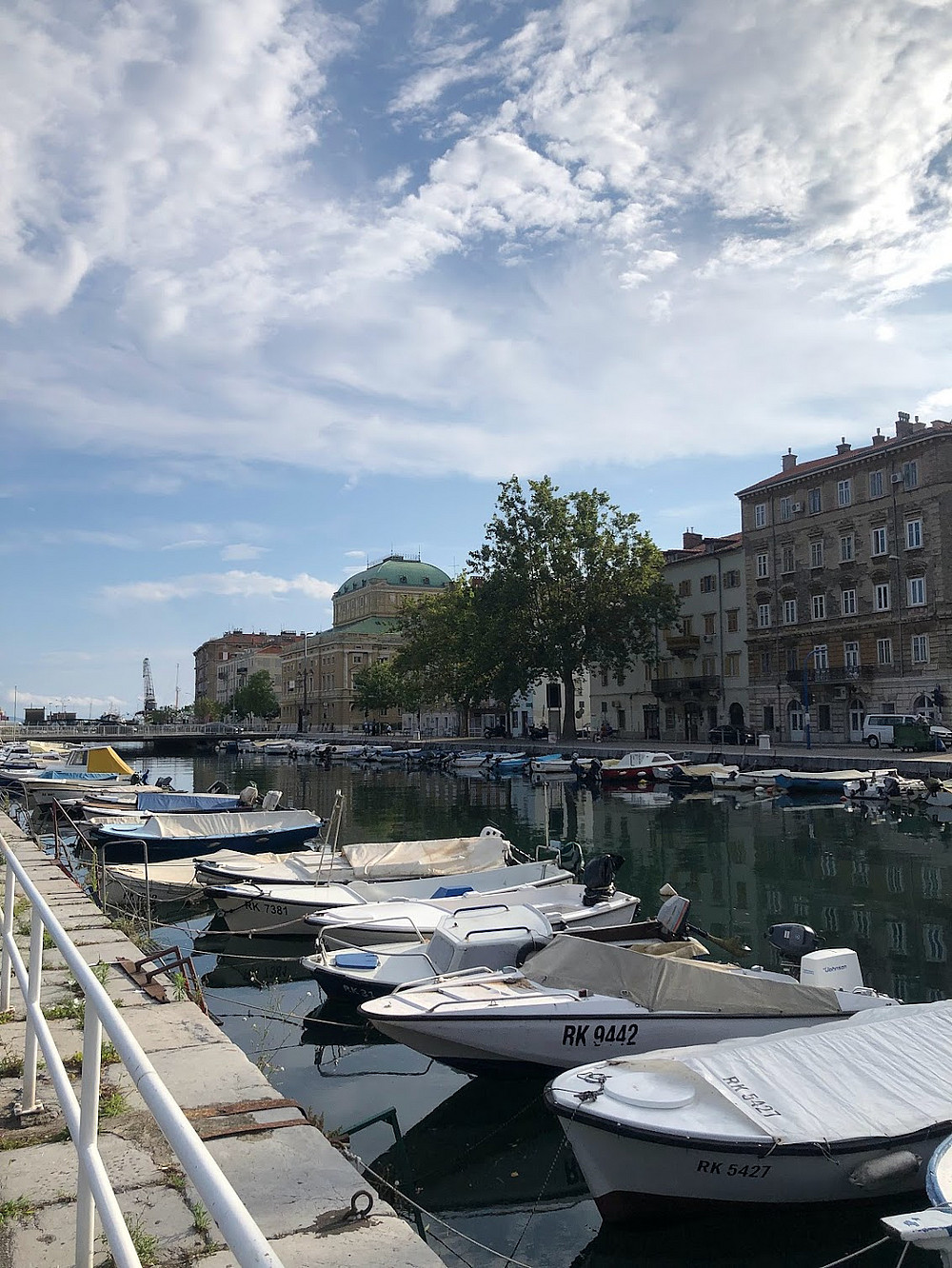
This performance – a guided walk along the Rječina River – has already taken place twice: first in September 2024, as part of the celebrations for the proposed Ričina Nature Park, and again in February 2025 during the carnival season. Emerging from a collaboration between the theatre collective Igralke and the Kamenjak Mountaineering Club, the project positions itself at the intersection of performative practice and situated environmental engagement, taking the form of choreographed urban walks. This mode of collectively conceived theatre resonates with ongoing debates in the environmental humanities, which I discussed at a conference drawing on Kate Rigby’s theses on eco-social imperilment, highlighting the entanglement of ecological vulnerability. This text is currently under review and, pending a favourable outcome, will be published as a scientific work.
A new iteration of the walk along the Ričina is currently being prepared. In this context, I spoke via Zoom with Vanda Velagić, an actress and member of the Igralke collective, about the evolving dramaturgy of the project. Collaboration with the Urbani separe association continues to play a crucial role. Their work in supporting the Ričina Nature Park initiative interweaves hydrological phenomena with questions of socio-historical development and contemporary ecological challenges, framing the river as both a natural and cultural archive. As the Urbani safari describes it, the Ričina (or Rječina) is “a karst spring connected to Slovenia and Italy, the largest water protection area in the region, and the only nature park with its own language.” Extending across more than 850 hectares, the Rječina basin is home to approximately 3,000 inhabitants, alongside a rich diversity of plant and animal life. It is a landscape shaped by a delicate balance and threatened by human influence.
By emphasising the interdependence of human intervention and ecological preservation, these initiatives build on earlier artistic and activist practices. One important example is the work of Iva Korbar, who in 2020 launched the platform Love for Ričina in collaboration with the Balkan River Defence collective and has been instrumental in shaping public awareness. Her activism opposes the construction of a 60-metre dam for the proposed Kukuljani Reservoir, a project that would irreversibly alter the river’s source and flow. Through performances, workshops, and educational events in Rijeka, Korbar advocates for the preservation of the Ričina as a living, flowing ecosystem, as documented on her website. We decided to meet in Zagreb, where we walked together through Maksimir Park, speaking about water, trees, and literary imaginaries of scarcity.
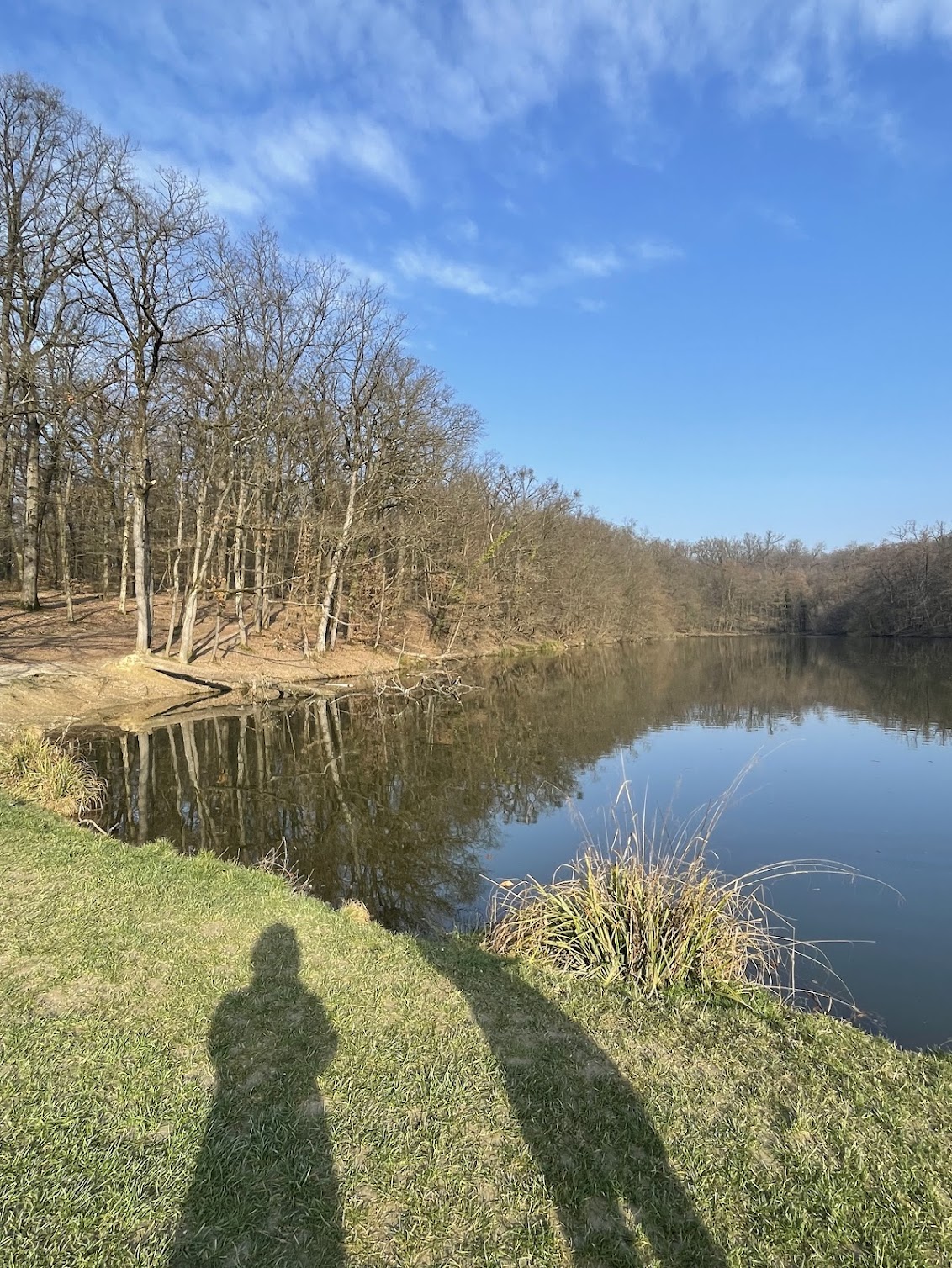
We also talked about the Croatian writer Vladimir Nazor, particularly his novella Voda (Water, 1927), which evokes an insular world shaped by drought and the fragility of water resources. Such literary echoes extend the project’s scope beyond the immediate locality, situating it within broader cultural histories of water and its absence. As part of the exhibition project in Graz, selected elements of Korbar’s work will be presented as art in the Hydrocene, further tracing the translocal currents through which the Ričina continues to flow – both materially and imaginatively.
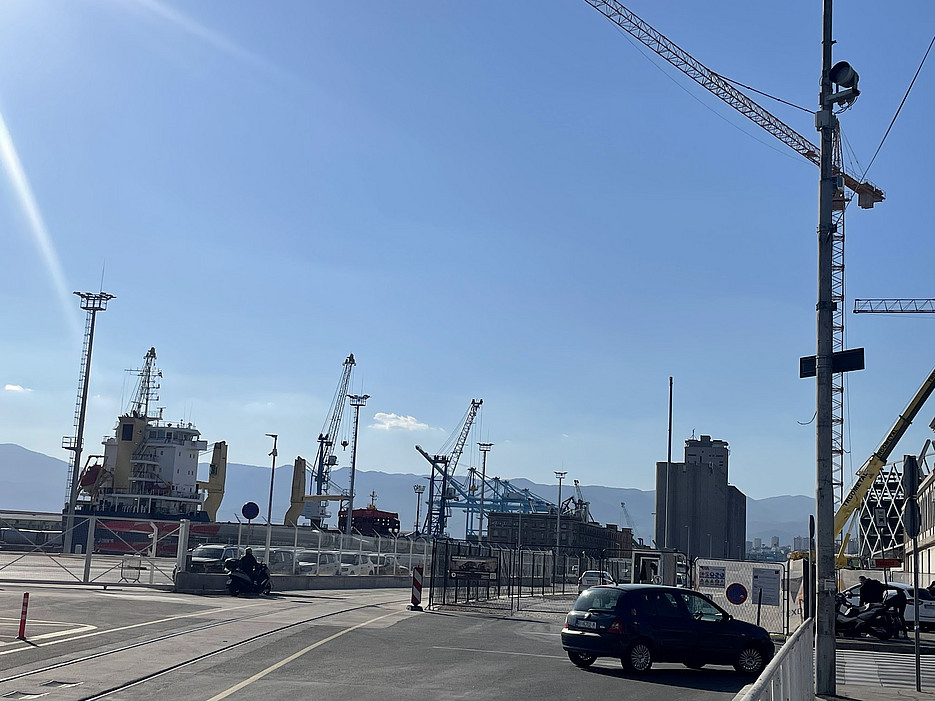
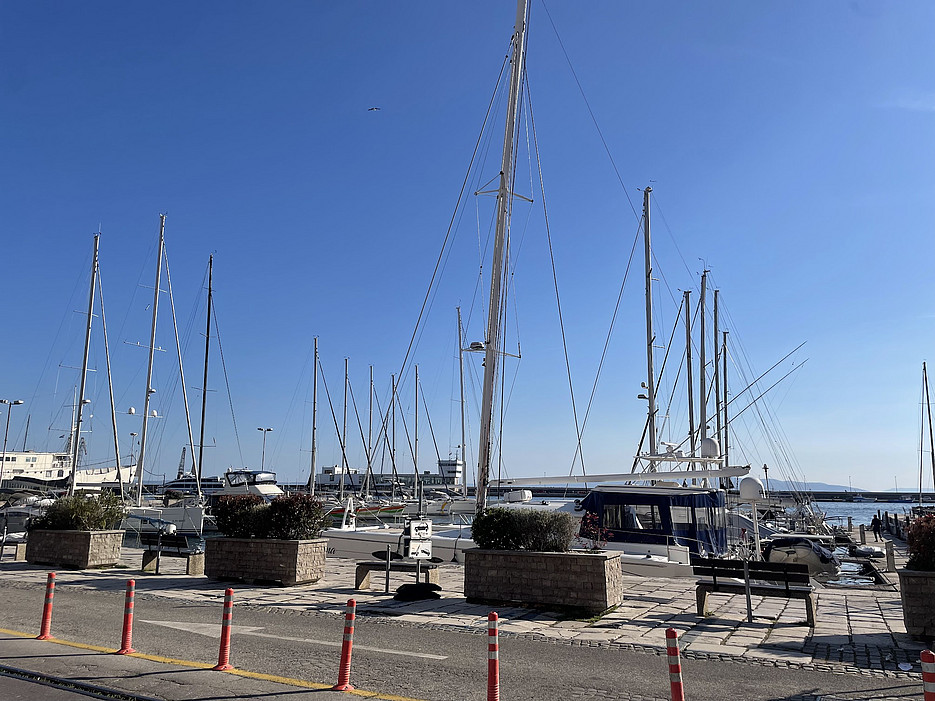
In the previously mentioned conversation with Vanda Velagić via Zoom, I learned that the collective’s next theatre project will focus on the port of Rijeka. Currently titled Čvor (Knot), the project was originally conceived as an exploration of the processes of gentrification and touristification reshaping the city’s waterfront. An earlier concept, provisionally called Two Ships, staged a symbolic encounter between a fishing boat and a cruise ship. Their meeting point, the port of Rijeka, was intended to serve as a site of tension between traditional maritime livelihoods and the expanding infrastructures of global tourism, particularly in light of plans for a new port to accommodate large cruise liners. Yet, as is often the case in port cities where geopolitical and economic currents intersect, the project’s trajectory shifted. Instead of tourist expansion, the port is now subject to processes of militarisation. In response, the Igralke collective has begun to reorient its work towards the theme of remilitarisation, tracing how shifting global dynamics are inscribed in local spatial practices and imaginaries.
My intention had been to pursue this line of inquiry further during the festival in Rijeka, following the development of this collaboratively conceived theatre and documenting it as part of an ongoing research project. Fieldwork, however, once again resisted planning. At the end of March, Zagreb was struck by a severe storm of unusual intensity. Classes were cancelled, and it was only by a fortunate convergence of circumstances that no lives were lost. The aftermath made the disruption tangible. Images from Maksimir Park, where only two weeks earlier I had walked with Iva Korbar through a seemingly tranquil landscape, now revealed scenes of devastation: uprooted trees, fractured pathways, and a park fundamentally altered.

The fragility of ecological and urban infrastructures became starkly visible. In this sense, the performative practices I had set out to observe, understood as both critical imitations of social practices and as social practices in their own right, were unexpectedly mirrored by the conditions that prevented my participation. Climate change intervened not only as a thematic concern but as a material force, disrupting the very possibility of fieldwork. Unable to travel, I had to rely on second-hand accounts of the festival’sunfolding. Reports indicate that, contrary to initial plans, the events did not take place along the river Ričina itself but were relocated to an enclosed space, another telling displacement of the river from lived, embodied experience.
Author: Milka Car
Date: 6.4.2026