Two Books That Will Change The Way You Think About Environmental Issues
Points of Reference
The crisis of emancipatory imagination is particularly evident in the field of environmental humanities. Complex jargon—including the very phrase environmental humanities—often conceals and mystifies rather than decoding power relations. The problem of imagination is a profound one because it points to what is missing in the bigger picture.
It is the political vision. If mission represents the highest level of abstraction, answering the question “What is the goal?”, then vision concerns the next step forward. If the mission is to stop climate change and prevent further environmental destruction, the vision must tell us who will achieve that, and how.
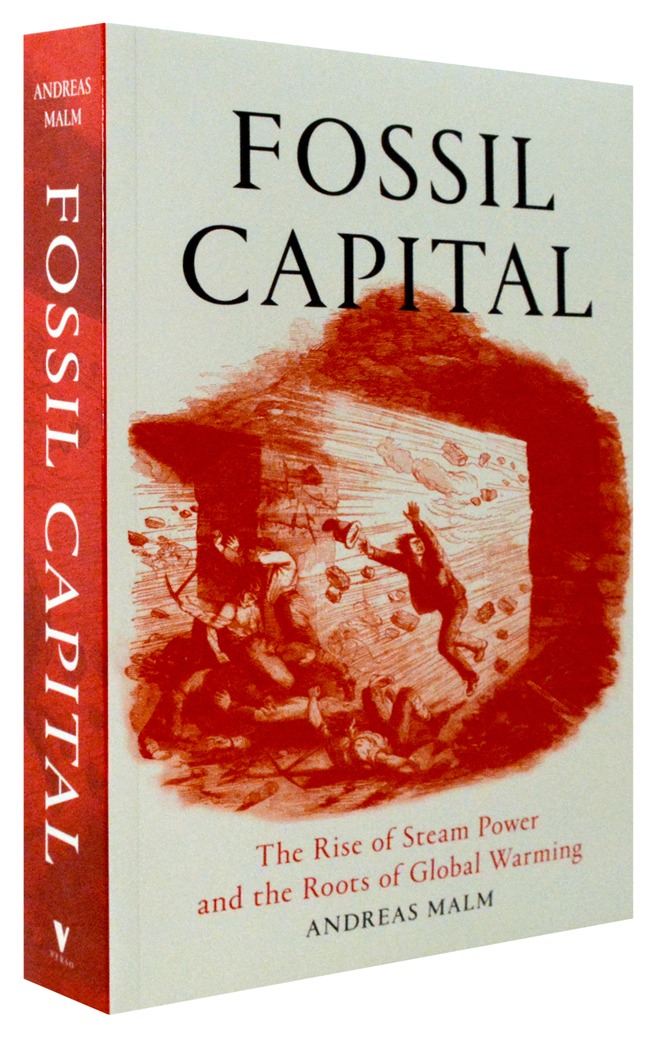
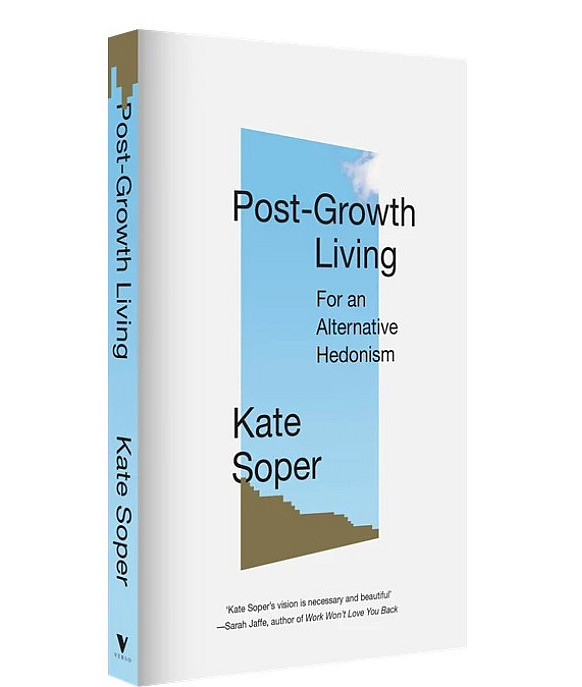
Among many noteworthy points of reference, I would single out Kate Soper’s Post-growth Living: For an Alternative Hedonism (Verso, 2020) and Andreas Malm’s Fossil Capital: The Rise of Steam Power and the Roots of Global Warming (Verso, 2016).
From a human ecology perspective, Malm explains global warming as a consequence of capitalism’s dependence on constant growth, which fuels a specific relationship with natural resources treated as inexhaustible. For Malm, the central event in human history was the invention of the steam engine in Manchester in 1842. What we are experiencing today—including heat waves and supersonic storms—is a direct consequence of coal combustion from the mid-nineteenth century. As he puts it:
Seen from another angle, global warming is a sun mercilessly projecting a new light onto history. Only now is it becoming apparent what it really meant to burn coal and send forth smoke from a stack in Manchester in 1842. When natural scientists discovered global warming, they passed on a discovery to historians yet to be made on anything like a comprehensive scale: these things were there for two centuries, invisible up to the present.(p. 4)
Fossil Capital teaches us a brutal yet indispensable lesson: although CO₂ emissions irreversibly harm generations of people we could never even theoretically meet, the capitalist class has financial, economic, and political interests in not stopping it.
This part of the argument speaks directly to the question of political vision by answering the “who” question—who is the collective subject of desirable change. Following Malm’s line of thought means that the working class, with its power to bring production to a halt, should play a vital role in the environmentalist movement. Moreover, any substantial change would not be achievable without it.
Fossil Capital also highlights another major problem of human subjectivity and environmental struggles—the cumulative effect of CO₂ emissions, which literally means that stopping them requires wholehearted struggle and intentional sacrifice for people who will forever remain an abstraction to us.
As a philosopher, Kate Soper examines people’s motivation to participate in environmental struggles. She turns to the analysis of basic human needs to show that facts alone, pointing to the disastrous effects of economic growth and technological development, will simply not mobilize the masses.
The political subject she seeks to reimagine is people across the political spectrum. Post-growth argues that:
A green renaissance of such holistic dimensions cannot be ‘owned’ and pursued by any one social grouping or constituency, nor conceived as the triumph of any one political force or perspective over its adversaries. Its realisation would transcend the conventional agonistics of partisan politics, requiring and developing a new and hegemonic ‘common sense’. (p. 163)
A decisive moment in achieving such hegemony would be a turn to a different political imagery. This imagery should underscore and celebrate what consumerism systematically destroys: free time, fresh air, and access to green spaces. Or, as she convincingly summarizes, “to insist on the sensually impoverishing aspects of consumer culture is to open up a new political imaginary.”
Both Kate Soper’s Post-growth Living and Andreas Malm’s Fossil Capital go a step further than merely responding to difficult and painful questions. They provide a framework for articulating a strategy that shifts ecological concerns from the discourse of the moralism of the privileged into the realm of highly engaging political articulation.
Author: Jelena Lalatović
Date: 11.5.2026