



Walking the past in riverine East London
Research in practice
My Liminal Water project, entitled “Wayward Maritime Countercultures”, retrieves the brief London sojourn of the nomadic, Jamaican-born, bisexual writer Claude McKay. Before coming to London, McKay had been living in Harlem, working on the American railroads and for New York radical periodicals. He wanted to get away from the violence of US racism – and also of the pressure of newfound celebrity in the wake of the publication of his ground-breaking poem "If We Must Diev", which was about that violence. And he wound up in rainy, grey, conservative London, then still suffocating from the trauma of World War I. Looking for spaces he could belong, he found “coloured” clubs in the West End and socialist clubs in the East End.
An encounter with the socialist feminist Sylvia Pankhurst drew McKay deeper into East London, as she offered him work on her paper, The Worker’s Dreadnought. His job had two elements. First, he was to read the international press, identifying the frontlines of social and geopolitical conflict in this revolutionary post-war moment. (While hyper-locally rooted in East London, the planetary perspective of Pankhurst and her comrades contrasts sharply with the parochial Little Englandism of most other British socialist groups at the time.)
Second, he was to write about what was going on around East London docks. (Pankhurst saw the multi-racial maritime proletariat as one of the most “advanced” sections of the working class.)
In this capacity, and sometimes under the pen name “Leon Lopez”, he wrote about the racism of many white male dockside workers, about the white women who worked for and sometimes fell in love with Chinese men in Limehouse, London’s first Chinatown, and about British sailors poised to mutiny. These articles proved too radical for the British authorities, who raided the newspaper. McKay managed to keep information on his sources out of their hands, but it was Pankhurst who took the fall, serving time in prison for “sedition” under the Defense of the Realm Act while McKay skipped town, heading for continental Europe.
McKay’s ethnographically flavoured reportage, informed by Marxist analysis, anti-racist rage and an amused wonder at the variousness of human life, gives us a glimpse into sexually dissident and racially mixed wayward counter-cultures that thrived in the outcast world of riverine East London. His later novels would narrate other such wayward dockside spaces, most notably in Marseille.
His reporter’s ear for the cadences of the black Atlantic’s vernacular speech would later be hugely influential on the Francophone writers of the négritude movement (including Aimee Cesaire, who drafted Cahier d’un Retour au Pays Natal in Dalmatia, on the Croatian coast) as they sought to decolonise their literary voices. (His first Marseille novel, Banjo, would be translated into French by the anthropologist Ida Treat, and introduced by the intellectual Paulette Nardal and her sisters, from Martinique. My Liminal Water colleague, Jelena Lalatovic, has found that his writing – translated into Serbo-Croat – would resonate amongst interwar intellectuals on the Adriatic littoral too, as they built a Balkan decolonial literature.
There is already a small and inspiring body of writing about McKay’s London sojourn (most notably by Winston James, as well as by Gemma Romain, Caroline Bressey and others), and scant the archival and autobiographical sources have already been well mined. My project’s objective, therefore, is something a little different: to (literally) place McKay’s London routes and rootings within London’s heritage, to map his trajectory, to incite Londoners and London visitors to follow in and feel the traces of his footsteps.
The narrative arc of McKay’s London sojourn roughly follows the Regent’s Canal, from Islington where he had his first cramped lodgings and Hoxton where he mingled with the multilingual revolutionaries of the International Socialist Club, to the heart of Pankhurst’s movement around Roman Road, Old Ford Road and Victoria Park, to Limehouse and the West India Docks.
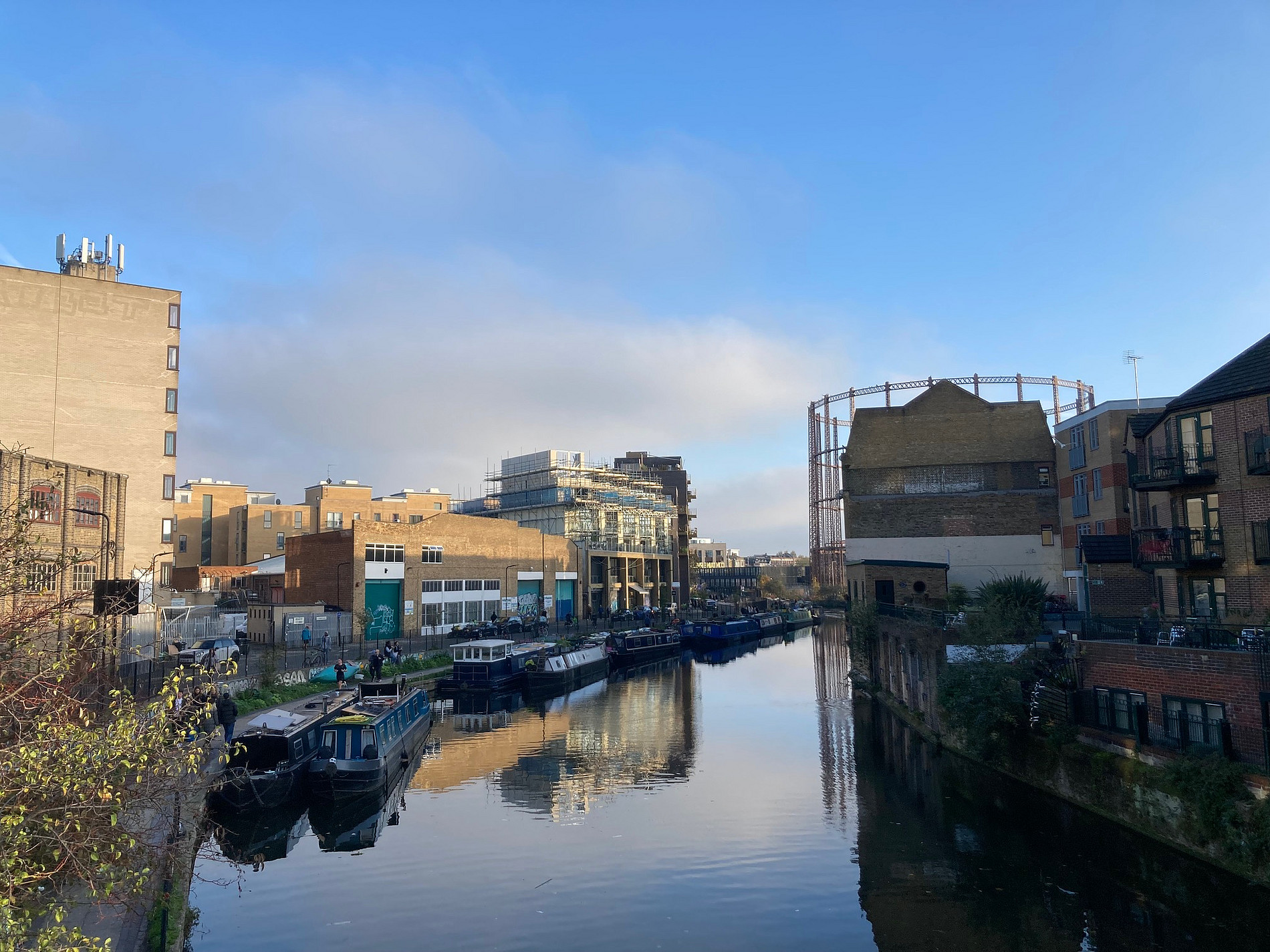
Walking the streets and canal-side paths with McKay’s ghost over the last year or so, my sense has been that the history of London is like the ebb and flow of the tidal Thames. The extracted wealth of empire carried upriver, and the bustling riverine industries serving its traffic, have receded, leaving a de-industrialised and peripheralised peri-urban landscape. Cycles of struggle – by working class women and by black and white maritime workers – have receded, leaving what Jonas Marvin calls the flavour of the colour of defeat. Successive property booms are followed by the bursting of each bubble.
But each of these leaves a sediment. Street names that inscribe distant colonial cartographies on the metropolis. Faint traces of old graffiti. The industrial archaeology of the mercantile era repurposed as picturesque heritage street furniture. Working docks now a leisure destination for the finance sector salariat. The tenements of the poor renovated as the gated communities of the rich. The doss house where penniless Russian communists stayed now live/work units for digital creatives. Residualised social housing built on the rubble of the slum clearances in Limehouse’s Chinatown.
The objective of this project is to make these traces visible. Digital humanities, then, as memory work: as anamnestic practice.
At the heart of this is an epistemology of walking: walking as an embodied form of knowledge-generation. Walking with McKay’s ghost is to know in one’s feet something about the lives – the hopes and dreams – sedimented here on the foreshore of the Thames and on the towpaths of the canal.
As we walk, we are joined by other ghosts. We know some of their names; others are nameless to us.
We are joined by Herbert Clarke and John Martin, black sailors arrested for defending themselves in a Limehouse alleyway from a drunken racist mob during a 1919 pogrom, as well as Maurice Katz, a teenage Jewish sailor from Limehouse, arrested for defending his mother’s shop there from white racists who didn’t like her serving black customers.
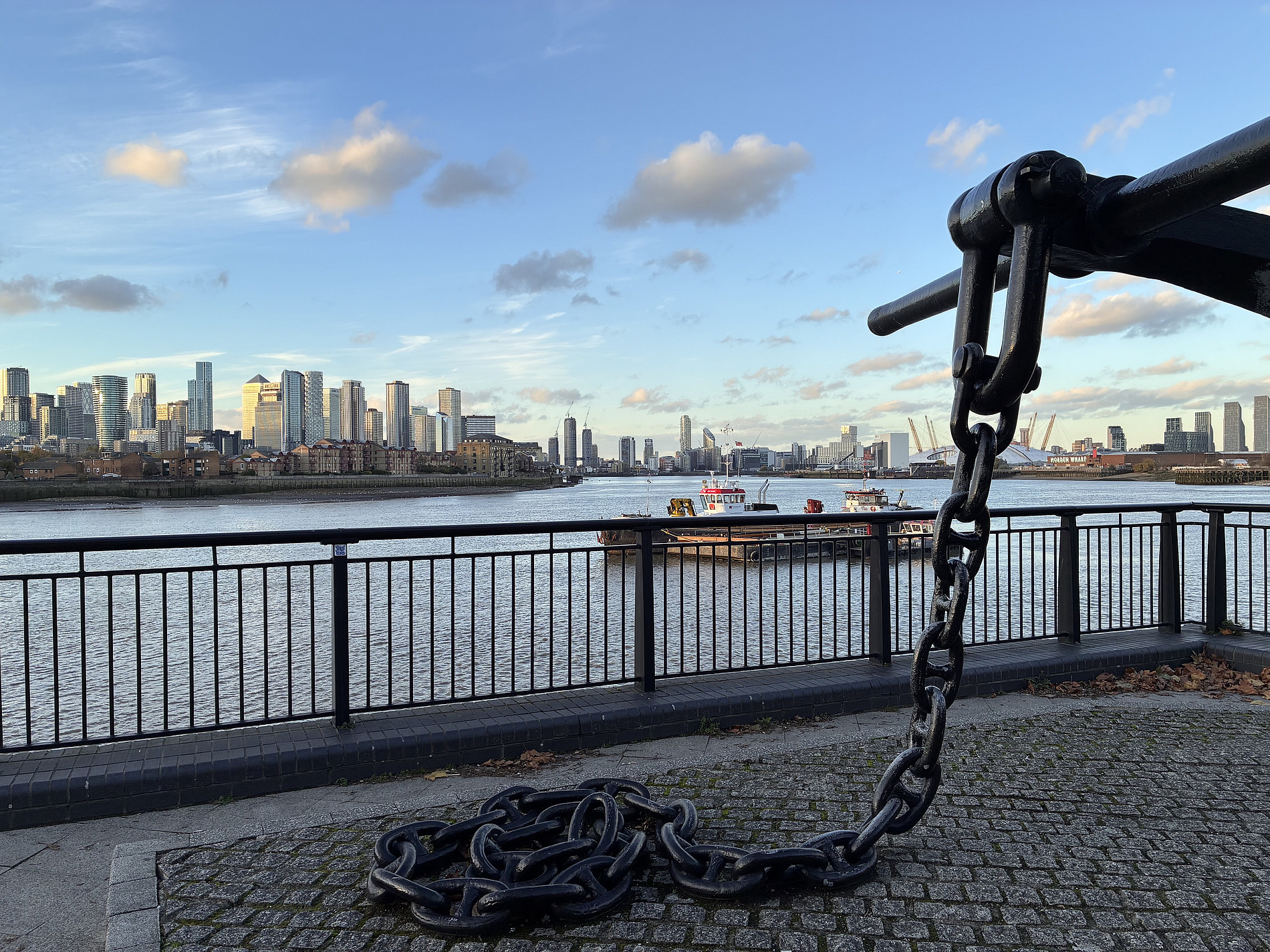
We are joined by Douglas (“Dave”) Springhall, the sailor whose name was so honourably kept secret by McKay and Pankhurst when they told his story of ship-mates ready to mutiny.
We are joined by Gustavus, my father’s father, born on the Whitechapel Road and the same age as Maurice Katz. Like Springhall (who was a year younger), he joined the Navy as a teenager in the First World War – they both served first in the rank of “Boy Second Class”, Springhall on the HMS Ganges and my grandfather on the Impregnable.
We are joined by Charles Ashleigh, McKay’s English Jewish lover, who had previously been a merchant seaman on the Pacific coast. Ashleigh’s ageing voice was recorded by my father in 1960s Brighton – but those recordings would later be lost when a cost-cutting university library disposed of them to free up space, a small but tragic act of wilful forgetting.
This project’s research in practice is: walking with these ghosts, feeling their paving stones beneath our feet, listening to their whispers, telling their stories, placing these stories on the map, letting them breathe again for new generations of Londoners, as the sweet Thames runs softly.
Date: 3. 7. 2026.